


Key takeaways
- Firm bumps at the back of the neck that keep coming back after close haircuts are a reason to get checked before they scar.
- How to tell: AKN shows up on the nape and lower back of the scalp, feels firm to the touch, and doesn't clear on its own.
- AKN usually starts between ages 14 and 25 and rarely begins after 50.
- Laser added to cream: In 10 people with bumps only, adding 8 monthly laser sessions cut severity scores by about 59%, versus about 30% with cream alone.
If firm, itchy bumps keep showing up along the back of your hairline after short haircuts and they don't fade, it's worth checking for acne keloidalis nuchae (AKN). Razor bumps and pimples can look similar at first, but AKN bumps tend to stay, multiply, and eventually merge into a raised scar. When treatment starts before scarring sets in, most people do well. Once scars form, AKN gets harder to treat.
How Is AKN Different From Razor Bumps?
How Is AKN Different From Razor Bumps?
Location, firmness, and staying power are the giveaways. AKN develops on the back of the neck and the back of the scalp, and the bumps are small, dome-shaped, and firm. Itching often comes first, starting hours or days after a close-shave haircut or wearing a helmet.
Acne keloidalis nuchae (AKN): A long-lasting inflammation inside the hair follicles on the nape that leaves firm bumps and scars. Despite the name, it isn't the same condition as ordinary acne.
Early on, it's easy to mistake AKN for pimples or razor bumps. Without treatment, though, existing bumps get bigger and new ones keep appearing. Here's how it tends to progress:
| Stage | What you see on the nape | What to keep track of |
|---|---|---|
| Early | Itch after a haircut or helmet | When the itch started and your haircut date |
| Bumps | Small, firm, dome-shaped bumps | Whether scratched spots fill with pus |
| Spreading | Bumps grow, new ones form, some hurt or bleed | Whether the number and size go up |
| Scarring | Bumps join into a raised scar | Whether hair stops growing there |
Hair doesn't grow back where scars have formed. Near the edges, you may also see "tufted" hairs, where several hairs sprout from a single opening.
Why Do Close Haircuts and Helmets Make It Worse?
Why Do Close Haircuts and Helmets Make It Worse?
AKN starts with inflammation inside hair follicles that doesn't switch off. Over time, that long-term inflammation weakens the follicle, and a hair can break out of it and burrow into the surrounding skin. That's when bumps appear. If the inflammation keeps going, scar tissue covers the follicles and they stop producing hair for good.
Why Do Close Haircuts and Helmets Make It Worse?
What irritates the area is mostly friction. Frequent close-shave haircuts, caps, hard hats, helmets, neck chains, and collared shirts all rub the same spot again and again. Skin folds on the back of the neck can add to it. Your risk also goes up if you take cyclosporine or certain seizure medicines (carbamazepine or phenytoin), have a long-term mild infection, or have a close blood relative with AKN.
AKN is uncommon in people of East Asian descent, but it does happen. A Seoul university hospital reviewed 17 Asian patients whose ages at diagnosis ranged from 20 to 69, and most had lived with it for more than 2 years. Seven had several red bumps, and 10 had a single large plaque. The lesions looked typical under the microscope, so unexplained scarring bumps on the nape are worth checking for AKN even in Asian patients.
Does Treatment Change Once Bumps Turn Into a Plaque?
Does Treatment Change Once Bumps Turn Into a Plaque?
Yes. At the bump stage, care usually begins with removing the irritation and using topical products. The first step is figuring out what's rubbing or shaving the area so you can stop it. An antimicrobial wash, such as a gentle foaming benzoyl peroxide cleanser, lowers the chance of infection. To shrink the number, size, and firmness of bumps, a corticosteroid cream is often prescribed, sometimes along with a retinoid, and some people get corticosteroid injections. Antibiotics are added if there's an infection. When these don't help enough, laser therapy or laser hair removal may be tried.
Does Treatment Change Once Bumps Turn Into a Plaque?
In a small split-scalp trial, 13 patients applied a steroid cream to both sides, and one side also got a 1064-nm laser once a month for 8 sessions. Among the 10 people who had bumps only, the laser side improved by about 59% compared with about 30% on the cream-only side, a statistically significant gap. Across all 13 people, the numbers were 49% and 33%, which wasn't a significant difference. Larger plaques and nodules didn't respond well to the laser, and the trial had few participants and many dropouts. Individual results vary.
Plaques are harder to shrink. In the Seoul study, 3 of the 7 patients with plaques saw them get smaller after steroid treatment, with or without freezing therapy (cryotherapy). For a large keloid-like scar, surgery to cut it out and cover the area with skin from elsewhere is another option.
What Can You Do at Home, and When Should You See a Doctor?
What Can You Do at Home, and When Should You See a Doctor?
For itching, a cool compress helps: run a clean washcloth under cool water, wring it out, and hold it on the itchy spot for 10 minutes. Used along with your prescribed treatment, it can take the edge off. Don't scratch, pick, or rub the bumps. Scratching or combing over them can lead to infection and pus-filled bumps.
Get medical care soon, rather than waiting for your next haircut, if you notice:
- Bumps getting bigger, or new bumps that keep appearing
- Bumps that hurt or bleed
- Swollen, painful lumps under the skin that fill with pus
- Foul-smelling fluid leaking from the skin
- Patches where hair has stopped growing over a scar
Pus-filled lumps that keep coming back can join into tunnels under the skin. These need to be drained by a doctor and treated for infection. Never try to squeeze or pop them yourself.
What Should You Bring to Your Appointment?
What Should You Bring to Your Appointment?
A doctor checking for AKN will look at the back of your neck and scalp and ask how often you get your hair cut and whether you wear a helmet or other headwear. So the most useful things to bring are your haircut schedule and a list of what touches your nape day to day. Taking photos of the area right after a haircut and again two weeks later, in the same light, makes it easier to see whether bumps are staying or spreading.
If you're in Seoul and want STON Clinic to take a look, include when the bumps first appeared, how often you get a close cut, and any medicines you take. One good question to ask is: "Are my bumps at a stage where topical treatment is enough, or do they need treatment to shrink a plaque?"
If this raised a question about your own skin
Ask a questionReferences
- How bumps on the nape progress into scars — American Academy of Dermatology — American Academy of Dermatology
- What irritates the nape and who tends to get AKN — American Academy of Dermatology — American Academy of Dermatology
- How AKN is diagnosed and treated — American Academy of Dermatology — American Academy of Dermatology
- Self-care for itch, haircuts, and clothing — American Academy of Dermatology — American Academy of Dermatology
- AKN in 17 Asian patients at a Seoul hospital — PLoS One, 2017 — PubMed Central
- Split-scalp trial of a 1064-nm laser plus steroid cream in 13 patients — J Cutan Med Surg, 2018 — PubMed Central
Frequently asked questions
Q. Can I catch AKN from dirty barber clippers?
A. No. AKN isn't contagious, and you can't get it from clippers or scissors. It's caused by long-term inflammation inside the hair follicles. Clippers matter only because a very close shave irritates the skin on your nape.
Q. Will growing my hair out help?
A. It can. When possible, dermatology guidance suggests haircuts that avoid shaving the back of the neck and head, since shaving these areas can cause flares. If your job or military service requires short hair, medical treatment is what helps keep AKN under control.
Q. Can I keep using hair pomade or wax?
A. It's better to stop while you have AKN. Pomade and hair grease can irritate the skin and trigger flares. Heat and sweat irritate it too, so try to keep the back of your neck cool and dry, especially after workouts.
Q. Do shirt collars and necklaces matter?
A. Yes. Anything that rubs the back of your neck can cause a flare. Collarless shirts and jackets help, as does skipping chains and lanyards around the neck. Choose hats that stop short of where your bumps are.
Q. Is laser hair removal alone enough to clear AKN?
A. Usually not. Laser hair removal is typically added when topical treatment and avoiding irritation aren't enough. In the 13-person trial, bumps responded well, but larger plaques and nodules showed limited improvement, so a plaque may need other treatment too.
Q. Do I need to keep treating it after it calms down?
A. Often, yes. Maintenance care is commonly recommended to keep AKN stable. That usually means washing the back of the neck and scalp with a gentle benzoyl peroxide cleanser and continuing to apply prescribed medicine to the treated areas.
Q. If a scar is surgically removed, can it come back?
A. When a keloid-like scar is completely removed, that scar can't grow back. The surgery cuts out the scar and covers the area with healthy skin from elsewhere, so ask about the size of the area and the recovery time before deciding.
Q. Can women get AKN?
A. Yes, but it's less common than in men. It's been seen in women with darker skin tones. Because AKN mostly affects young men, researchers think male hormones may play a role, though more research is needed.
Q. I'm visiting Korea for a short time. Can I get it checked during my trip?
A. A first visit is mainly an exam of the back of your neck and a discussion of your haircut habits and medicines. Treatments like monthly laser sessions take several months, so if you're only in Seoul briefly, ask which parts of the plan you can continue at home.
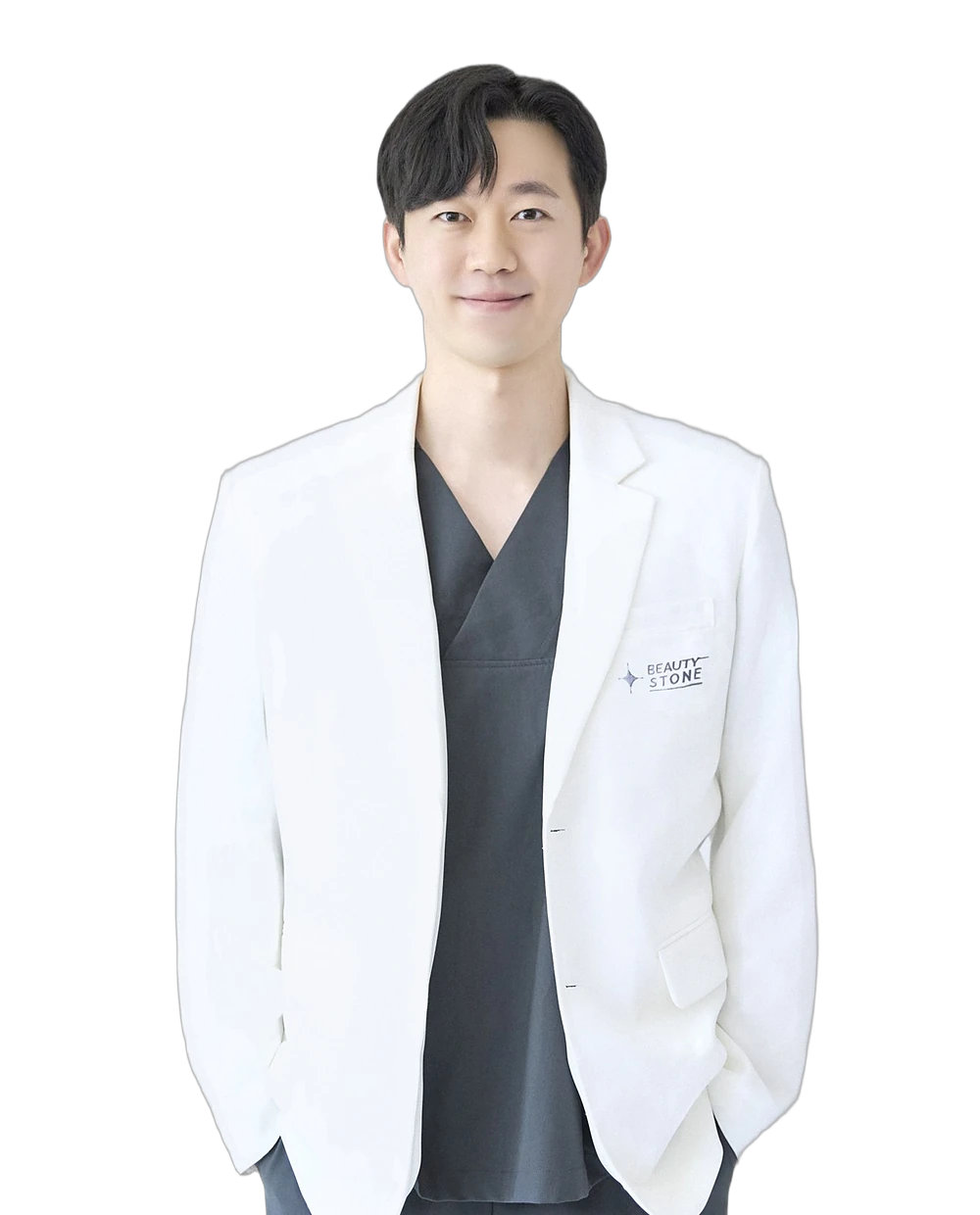
Jangju Kim Senior Director
JANGJU KIM
Dr. Jangju Kim is a clinic director at STON Clinic, LOTTE HOTEL in Myeongdong.
Career / Education
- 현) 스톤클리닉 명동 롯데호텔 원장
- 경희대학교 의과대학 졸업
Comments