


Key takeaways
- Thick, dark arm hair on lighter skin is the case where laser hair removal fits best.
- Sessions: most people need 2 to 6, and the first one cuts hair by about 10% to 25%.
- If your hair is very coarse or didn't respond to earlier laser, a deeper-reaching wavelength may be worth discussing.
- Upper arms: men have a higher reported rate of hair growing back thicker there, so it's worth treating that area in stages.
If your arm hair is thick and dark and your skin is on the lighter side, laser hair removal is usually the first option to look at. The laser aims at the dark pigment in each hair root, so coarse, dark hair takes in the light well. Fine, light hair or freshly tanned skin changes that answer.
Why Does Laser Work Better on Thick, Dark Arm Hair?
Why Does Laser Work Better on Thick, Dark Arm Hair?
Laser hair removal sends light into the skin, and the dark pigment (melanin) in the hair root absorbs it. That heat weakens the part of the follicle that makes new hair. The darker and thicker the hair, the more light it takes in. Hair color, hair thickness, the area treated, the type of laser, and your skin color all shape the result*.
Based on American Academy of Dermatology patient guidance
That's also why the same arm can respond unevenly. The outer forearm often has dense, coarse hair, while the inner forearm tends to have finer hair mixed in. Expect the coarse patches to thin out sooner and the fine patches to lag behind.
Why Does Laser Work Better on Thick, Dark Arm Hair?
Skin color matters just as much. When skin is darker or recently tanned, the top layer of skin absorbs some of the light too. In that case, the settings need to be gentler, or the session needs to wait until your tan fades.
Which Laser Wavelength Suits Coarse Arm Hair?
Which Laser Wavelength Suits Coarse Arm Hair?
If your arm hair is very coarse, or earlier laser sessions didn't clear it well, the first thing to consider is whether to add a wavelength that reaches deeper. Hair removal lasers commonly use an alexandrite wavelength, an Nd:YAG wavelength, or a device that offers both, such as the GentleMax Pro Plus. In the US, that device is FDA-cleared for hair reduction across all skin types, including tanned skin.
Using both wavelengths on the same spot isn't automatically better, though. In a trial of 15 people treated on the legs, combining the two didn't remove more hair than using one alone, and it caused more pain and more skin darkening. So the choice comes down to your hair and skin, not to stacking settings.
Which Laser Wavelength Suits Coarse Arm Hair?
In that same trial, hair counts were 74% to 84% lower 18 months after the fourth and final session, and the differences between the four approaches weren't meaningful. Keep in mind it looked at legs in people with medium skin tones, so treat it as a rough benchmark for arms rather than a promise. Individual results vary.
How Many Sessions Do Men's Arms Need?
How Many Sessions Do Men's Arms Need?
Expect roughly a 10% to 25% reduction after the first session. Most people need 2 to 6 sessions to reach the result they're after. That's why one session and a T-shirt test often feel underwhelming.
Most people can have a session every 4 to 6 weeks. Hairs grow in cycles, and spacing visits out lets the next batch of hairs reach a stage where the laser can catch them. Too short a gap means fewer hairs are ready to treat, and too long a gap makes it harder to compare one session with the next.
When the hair does come back after a full course, it tends to be sparser, finer, and lighter. Many people stay mostly hair-free for months or even years, and some book a maintenance session when a few hairs return. How much you see depends on your hair and skin.
Forearms, Upper Arms, or Hands: Where Should You Start?
Forearms, Upper Arms, or Hands: Where Should You Start?
If what bothers you is the hair below your T-shirt sleeve, start with the forearms. Add the upper arms after a session or two, once you've seen how your hair responds. Hair on the back of the hands and fingers can be included from the start, though there's usually less of it to treat.
There's a reason to stage the upper arms. Rarely, hair near a treated area grows back thicker or denser instead of thinner (paradoxical hypertrichosis). In one Japanese clinic's records, men showed it more often than women, mostly on the back, upper arms, and shoulders. Upper arms were affected in 7 of 63 men (11.1%).
Paradoxical hypertrichosis: hair near a treated area that grows back darker, coarser, or denser.
| Area | Start here if | Watch for |
|---|---|---|
| Forearms | Coarse hair shows below your sleeves | Whether outer and inner forearm hair differ |
| Upper arms | You wear sleeveless tops or liked your forearm result | Whether hair gets thicker between sessions |
| Hands and fingers | Hair stands out when you use your hands | Whether it needs its own session count |
If you do treat the upper arms, check that area for thicker regrowth at every visit. If you notice it, the settings and the area can be adjusted before the next session.
Arm Laser Side Effects: What's Normal and When to Get Help
Arm Laser Side Effects: What's Normal and When to Get Help
If your arms are tanned, look at how tanned they are right now before booking, and decide whether that session should wait. Arms are fully exposed whenever you wear short sleeves, so letting a tan fade first is the safer plan.
Redness and swelling are common, often look like a mild sunburn, and usually settle within 1 to 3 days. A cool compress helps, and keep the treated skin out of direct sun while it heals.
Blisters and scarring are rare. If you notice any of these, seek medical care right away, whatever date your next session is:
- Blisters, or skin that weeps fluid
- Warmth and pain that keep getting worse, or pus
- Skin that turns noticeably lighter or darker
Color changes often fade over time, but some are permanent. If you have tattoos or moles on your arms, show them to your provider before the first session.
Fitting Arm Laser Sessions Into a Trip to Seoul
Unless you've had sedation that day, flying home isn't a reason to delay after an arm laser session. Redness usually settles within 1 to 3 days, and long sleeves cover the treated skin on the plane.
One visit won't replace a full course. Arm hair thins gradually over 2 to 6 sessions spaced 4 to 6 weeks apart, so a single session on one trip is a start rather than a finish.
Once you're home, you can send photos and questions to the clinic on WhatsApp. If you develop blisters, pus, or pain that keeps getting worse, see a local doctor first rather than waiting for a reply.
When Regrowth Comes Back: Keep Going or Stop?
If the hair that comes back is still coarse and dark, the laser can still catch it, so more sessions make sense. If the colored hair is gone and only fine, pale fuzz is left, stop and reassess instead of adding sessions. Fuzz has little pigment for the laser to target, so extra sessions do less.
The easiest way to judge your progress is a photo of your outer forearm in the same light before each session. STON Clinic is in Myeongdong, on the 9th floor of Lotte Hotel Seoul near Euljiro 1-ga Station, and consultations are available in English. If you can't tell whether coarse hair or just fuzz is left, send that one photo on WhatsApp before your next visit.
If this raised a question about your own skin
Quick bookingReferences
- Laser hair removal sessions, results, and side effects — American Academy of Dermatology — American Academy of Dermatology
- What to tell your provider and how hair thickness and color matter — American Academy of Dermatology — American Academy of Dermatology
- Two hair removal lasers alone and combined, 18-month leg trial — Arch Dermatol, 2008 — PubMed Central
- Thicker regrowth after laser compared in men and women — J Cosmet Dermatol, 2025 — PubMed Central
- GentleMax Pro Plus US clearance and the definition of permanent hair reduction — US FDA — U.S. Food and Drug Administration
Frequently asked questions
Q. Is laser hair removal on men's arms permanent?
A. Laser hair removal on arms gives long-term reduction, not a promise that every hair is gone for good. In US device clearances, "permanent hair reduction" means fewer hairs regrowing, stable when measured 6, 9, and 12 months after a course. Some regrowth still fits within that definition.
Q. How long does an arm laser session take?
A. The length of an arm laser session depends on how much area you treat. A small area like the upper lip takes minutes, while large areas like the back or legs can take more than an hour. Forearms alone fall well short of that, and full arms plus hands take longer.
Q. Does arm laser hair removal hurt?
A. Many people describe arm laser pulses as warm pinpricks or a rubber band snapping against the skin. Dense, coarse hair on the outer forearm can sting more than the finer inner side. Speak up during the session if it feels too strong so the settings can be adjusted.
Q. Can I go to work or the gym after arm laser hair removal?
A. Most people return to their usual routine right after arm laser hair removal. The skin can look red and puffy, like a mild sunburn, so on that day a light workout is more comfortable than a sweaty one. If you're outdoors, cover the treated area with long sleeves.
Q. Will laser work on gray hairs on my arms?
A. Gray or very light arm hairs have little pigment for the laser to target, so they won't thin as much as dark hairs. Laser hair removal works best on dark hair over lighter skin. If much of your arm hair is gray, it's worth discussing what laser can realistically do before you start.
Q. What should I tell my provider before arm laser hair removal?
A. Before arm laser hair removal, mention any recent tan, a tendency to scar, or a history of keloids. Also share whether you get cold sores, whether you've taken isotretinoin for acne, and any medicines you take, such as aspirin. These can change when you start and how the laser is set.
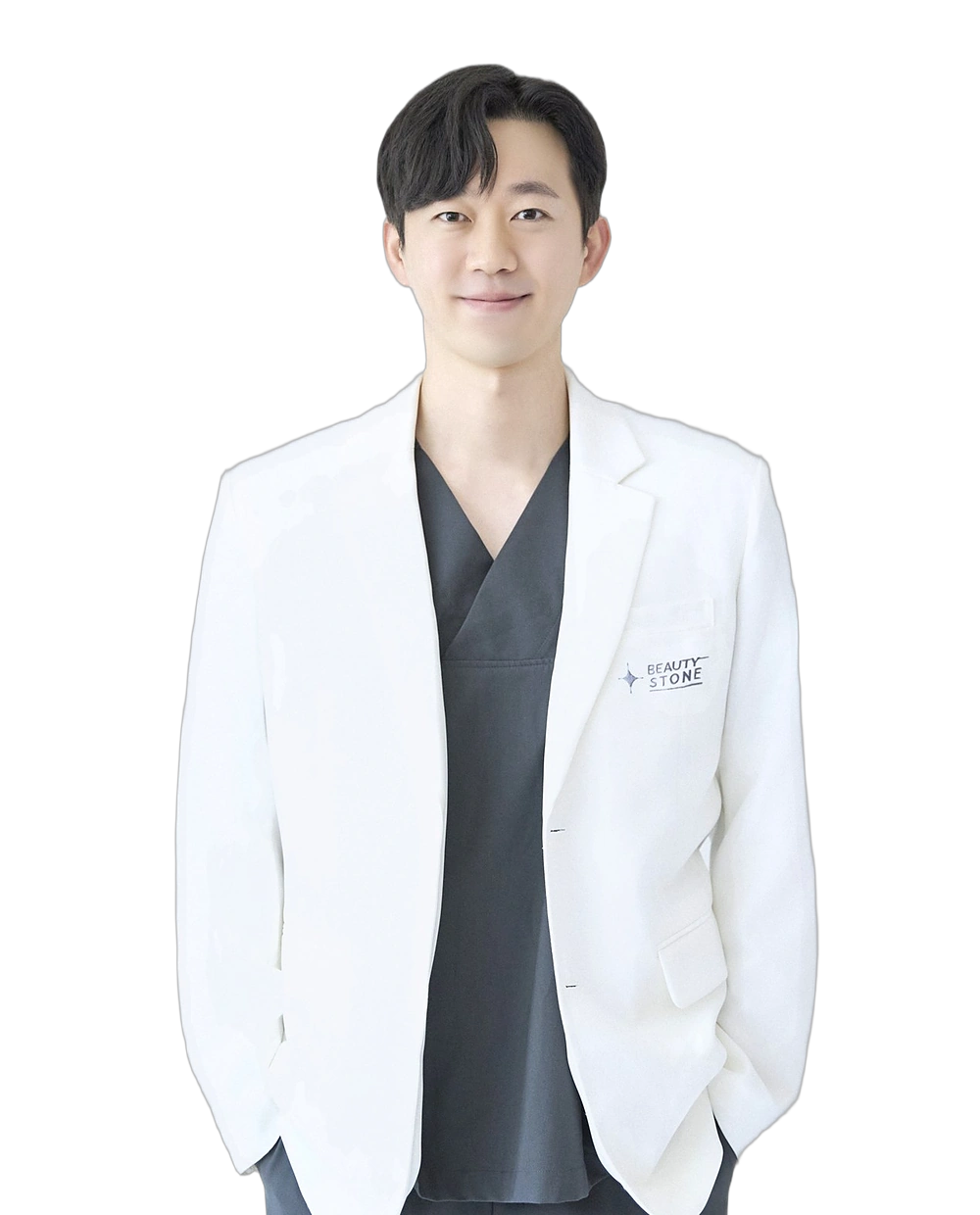
Kim Simon Jang-ju Head Physician
JANGJU KIM
Head Physician Kim Simon Jang-ju practices at STON Clinic, LOTTE HOTEL in Myeongdong (from December 1, 2026).
Career / Education
- Current) Head Physician (practicing at STON Clinic Myeongdong and Beautystone Clinic Hapjeong; Myeongdong from Dec 1, 2026)
- Graduated from Kyung Hee University College of Medicine
Comments