


Key takeaways
- How to read the surface of a bare patch rather than its width
- Why an immune reaction and shaving irritation call for different approaches
- What order shaving adjustments and clinical care usually follow
- Which photos and records make a consultation genuinely useful
Most people find it mid-shave. The beard hasn't thinned overall, every other area still comes in the way it always did, and yet one spot along the jaw is bare to about the size of a coin.
The usual next move is to search for razor irritation or beard hair loss. But two people who both describe "a bare patch in the beard" can need completely different approaches, depending on what actually happened in that spot. Did an immune reaction aimed at the follicles push the hairs into rest early? Did shaved hair tips curl back into the skin and set off repeated inflammation? Or are both running at once? The width looks similar either way, but the traces they leave behind are different, so working out which one dominates makes every later decision much simpler.
This guide walks through what to look at first when a beard looks patchy, how to separate an immune reaction from shaving irritation at home, and what order the options tend to follow.
This article summarizes treatment information from BeautyStone Clinic in Hongdae, Seoul. Individual results vary, and whether a procedure suits you is a decision to make with a board-certified dermatologist.
Read the Surface of the Patch, Not Its Width
Read the Surface of the Patch, Not Its Width
When the beard looks bare in one spot, the detail that decides the answer isn't how wide the gap is. It's the state of the skin inside it. A review of alopecia areata* affecting the beard reported that after the scalp, the beard is the most common site of hair loss in men, occurring in 28 percent of men with alopecia areata.
Alopecia areata: a condition in which an immune reaction aimed at the hair follicle ends the growth phase early, leaving a sharply bordered bare area. It's grouped with the forms of hair loss that leave no scar.
That suggests an order for checking at home. Look at the surface of the patch in good light first. Skin that is smooth, with no redness, no bumps and no crusting, points toward the immune reaction. Then look at the border. A round coin-like edge with a clear outline points toward the immune reaction; a spread that follows the direction the razor travels points toward irritation. Finally, line it up against timing. A pattern that flares the day after shaving and settles after a few days off points toward irritation, while a patch that widened quietly over several weeks regardless of shaving points the other way.
What else is involved gives a clue too. The same review noted that people with alopecia areata carry a 16 percent greater risk of having or later developing another autoimmune condition, and listed thyroid disease, diabetes and vitiligo among the conditions mentioned alongside it. So it's worth checking whether similar gaps have appeared in the eyebrows or on the scalp.
Read the Surface of the Patch, Not Its Width
An Immune Reaction and Shaving Irritation Are Different Problems
An Immune Reaction and Shaving Irritation Are Different Problems
The most widely used clue for separating the two is the presence of bumps. A review of pseudofolliculitis barbae* explains that shaving or plucking the hair precipitates an inflammatory reaction as the growing sharp tips penetrate the adjacent skin, and that the curly nature of the hair together with the presence of whorls increases the risk of developing the condition by 50 percent. The same review records that the condition has been reported in 45 to 83 percent of Black recruits and soldiers who shave in the US army.
Pseudofolliculitis barbae: a condition in which shaved hair tips grow back into the skin, producing repeated bumps and inflammation. It's assessed separately because the hair is trapped rather than lost.
The timeline differs too. That review notes that once a hair is left to grow to a length of about 10 millimeters, the trapped hair is pulled out of the inflammatory papule, and that stopping shaving generally settles symptoms over about 12 weeks. It also records that when the condition repeats for long enough, raised keloid scars can develop. That's why a spot with recurring bumps is better addressed early than watched over time.
| What you notice | What actually shifted | What to check first |
|---|---|---|
| One round spot is bare | Immune reaction at the follicle | Whether the skin inside is smooth |
| Bumps and redness inside the gap | Inflammation around ingrown hairs | Whether tips curl back into the skin |
| It flares the day after shaving | Irritation tied to the shaving cycle | Whether a few days off settles it |
| Eyebrows or scalp are patchy too | An immune reaction across sites | The shape of the borders elsewhere |
| Healed spots feel raised | Scarring left by repeated inflammation | Whether the area feels firm |
So the checking order runs surface, border, timing, other sites. Where those four point determines which problem any correction belongs to, even when the complaint sounds identical. If irritation dominates, pursuing hair-loss care alone leaves the bare spot exactly where it was while the bumps keep returning.
One more thing worth holding onto: both can sit on the same face. When alopecia areata lands on a spot where irritation has been recurring, bumps remain on the surface and the border looks blurred. That's why, in the consultation room, matching several weeks of change against shaving habits matters more than a single photo from one moment.
Why BeautyStone Clinic Photographs the Beard Zones First
Why BeautyStone Clinic Photographs the Beard Zones First
At BeautyStone Clinic in Hongdae, Seoul, a consultation about the beard starts by recording the zones that run across the jawline, the area around the mouth and the front of the neck, rather than the diameter of one gap. A recently proposed assessment tool divides the beard into six regions — the right and left mandibular branches, the mustache area, the right and left lateral cervical regions and the medial cervical region — awarding one point per involved region for a total from 0 to 6, with 1 to 2 regions counted as mild, 3 to 4 as moderate and 5 to 6 as severe. The same paper states plainly that the tool is a theoretical proposal still requiring validation. So rather than treating the score as a target, the zones are used as a way to hold photographs at the same angle and lighting and compare them weeks apart.
Why BeautyStone Clinic Photographs the Beard Zones First
What Order the Options Usually Follow
What Order the Options Usually Follow
The sequence starts with whatever is reversible. On ingrown hairs, the UK's National Health Service advises to wet the skin with warm water and use shaving gel, shave in the direction the hairs are growing, leave at least 1 millimeter of stubble rather than shaving too closely, avoid blunt razors and daily shaving, and not scratch, pick or squeeze ingrown hairs. The same guidance says to see a doctor if the area becomes very painful, hot or swollen.
That's why adjusting the shaving routine sits near the front. Changing blades more often and stretching the interval between shaves frequently changes the number of bumps within days. This stage doesn't fill the bare spot directly, but the surface inflammation has to clear before the border can be read properly, so it comes first for the sake of the assessment as well. Conversely, if the surface is already smooth and the gap alone keeps widening, adjusting the routine won't change it, and moving on to clinical care is the better step.
Addressing the immune side continues in the consultation room. In the beard review noted above, among patients treated with injections placed directly into the affected areas, approximately 85.7 percent had at least 75 percent regrowth of beard and scalp hair within six months. The same review places checking thyroid and blood-sugar status alongside that, given how often alopecia areata is mentioned with other autoimmune conditions. If the patch widened quickly over a few months, or reached the eyebrows and scalp, bringing the appointment forward beats waiting.
What to Bring to a Consultation
What to Bring to a Consultation
The most useful thing to bring is photographs. Front, left and right profiles, plus one with the chin raised slightly to capture the front of the neck, all shot under the same lighting, get used immediately. Adding a pair taken right after a shave and again two days later makes separating surface inflammation from the bare spot considerably easier.
Records help too. Noting when the gap first appeared, whether it widened over a matter of weeks, and what shaving interval and tools are in use speeds up the assessment. If you're on thyroid or blood-sugar medication, or someone in the family has alopecia areata or vitiligo, mention that as well. Whether similar spots exist in the eyebrows or on the scalp, and whether small pits have formed in the nails, are useful too.
Finally, it's worth setting expectations early. Care here is less about filling the gap in one go and more about assigning surface, border and timing their share and working through each gradually. Agreeing on that direction upfront makes the view a few months later much easier to live with.
If this raised a question about your own skin
Ask a questionReferences
- after the scalp, the beard is the most common site of hair loss in men, occurring in 28 percent of men with alopecia areata — PubMed Central
- shaving or plucking the hair precipitates an inflammatory reaction as the growing sharp tips penetrate the adjacent skin, and that the curly nature of the hair together with the presence of whorls increases the risk of developing the condition by 50 percent — PubMed Central
- divides the beard into six regions — the right and left mandibular branches, the mustache area, the right and left lateral cervical regions and the medial cervical region — awarding one point per involved region for a total from 0 to 6, with 1 to 2 regions counted as mild, 3 to 4 as moderate and 5 t — PubMed Central
- wet the skin with warm water and use shaving gel, shave in the direction the hairs are growing, leave at least 1 millimeter of stubble rather than shaving too closely, avoid blunt razors and daily shaving, and not scratch, pick or squeeze ingrown hairs
Frequently asked questions
Q. If the bare skin is smooth, can I rule out shaving as the cause?
A. Treat it as one clue rather than the answer. Shaving-related inflammation tends to leave bumps and redness behind, so a completely calm surface can be read as pointing toward the immune reaction. That said, the two can sit on the same face, so instead of deciding on the surface alone, check the shape of the border and the shaving interval as well.
Q. If I stop shaving for a while, will it come back on its own?
A. That depends on which one it is. The pseudofolliculitis review records that stopping shaving generally settles symptoms over about 12 weeks, and that a hair left to reach roughly 10 millimeters pulls itself free of the papule. A sharply bordered bare patch, by contrast, often doesn't change with a shaving break alone, so if a few weeks pass with no difference, moving on to clinical care makes sense.
Q. Only my beard is affected. Do I still need my scalp checked?
A. It's worth doing once. The beard review records that the beard is involved in 28 percent of men with alopecia areata, and that the condition carries a 16 percent greater risk of having or later developing another autoimmune condition. Even with a scalp that looks fine today, taking one look at the eyebrows and the nails is the natural flow.
Q. Could it leave a scar?
A. That depends on which one it is. A sharply bordered patch with a smooth surface is classed among the forms that leave no scar. Shaving-related inflammation that repeats for long enough, on the other hand, has been reported to leave raised keloid scars. That's why a spot with recurring bumps is better addressed early than waited out. At BeautyStone Clinic the surface and the shaving record get reviewed first, and the sequence is agreed from there.
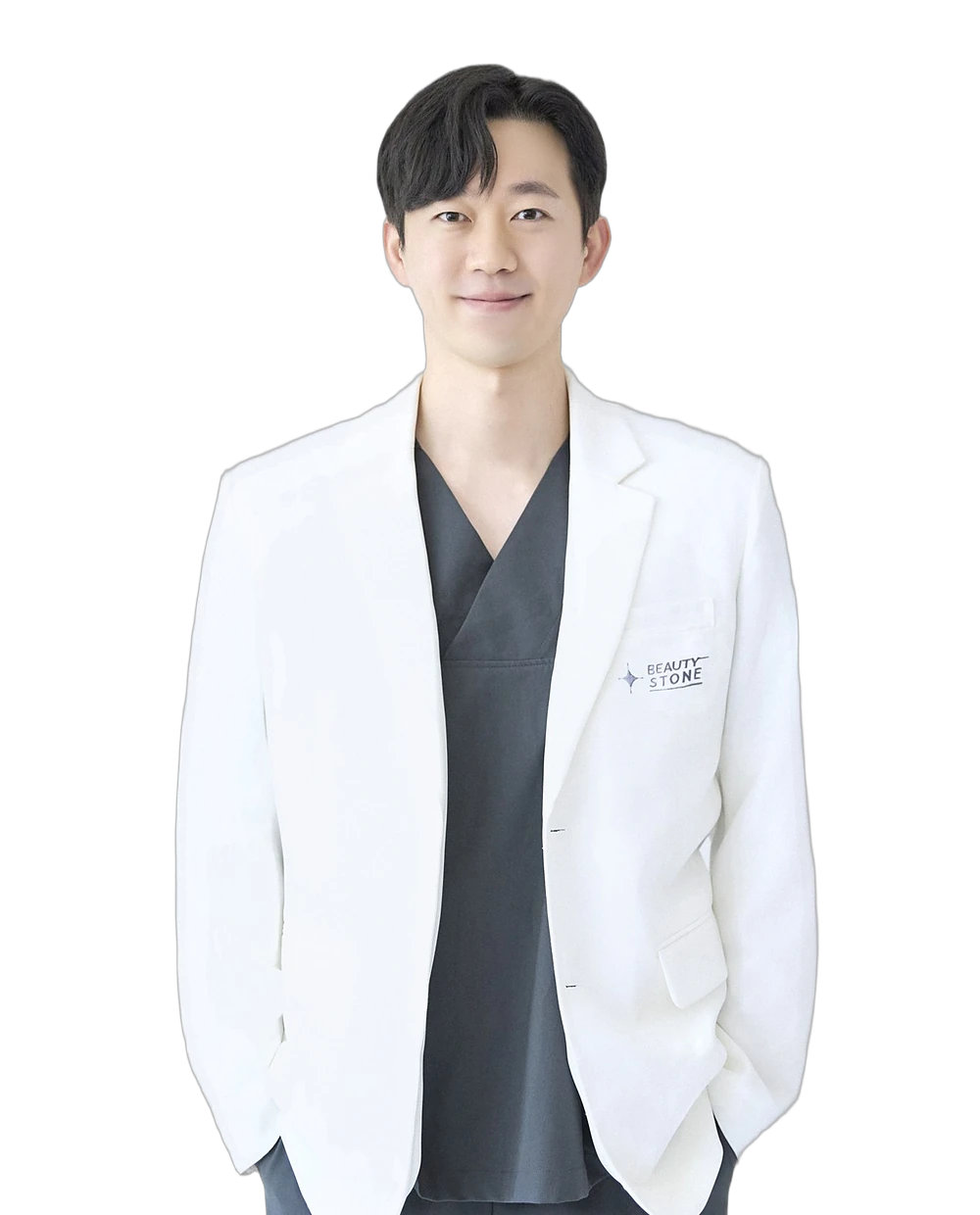
Jangju Kim Senior Director
JANGJU KIM
Dr. Jangju Kim is a clinic director at STON Clinic, LOTTE HOTEL in Myeongdong.
Career / Education
- 현) 스톤클리닉 명동 롯데호텔 원장
- 경희대학교 의과대학 졸업
Comments