


Key takeaways
- Why palm sweating gets sorted by onset and spread before volume
- How many criteria the diagnosis of primary focal hyperhidrosis is set out in
- Which signs call for further evaluation when sweating turns generalized
- How to record severity and daily interference before a consultation
If paper goes damp under your hand, or you have picked up the habit of wiping your palm on your trousers before a handshake, sweating has moved from a weather problem into a daily one. When it reads the same in every season rather than only on hot days, it tends to stay on your mind.
The first thing worth sorting isn't how much sweat there is. It's when it started and how far across the body it spreads. Sweating confined to set areas like the palms and soles, and sweating that soaks the whole body and carries on through sleep, lead to different things worth checking.
This guide walks through how palm sweating gets sorted into two directions, the reported prevalence and age of onset, how severity gets written down, and what's worth settling before a consultation.
This article summarizes treatment information from BeautyStone Clinic in Hongdae, Seoul. Individual results vary, and whether a procedure suits you is a decision to make with a board-certified dermatologist.
Palm Sweating Gets Sorted Into Two Directions First
Palm Sweating Gets Sorted Into Two Directions First
Two different things share the phrase "I sweat a lot". One stays in set areas. The other soaks the whole body.
Frequency sets the direction. A questionnaire survey of primary focal hyperhidrosis* in an adult population records that the prevalence of primary focal hyperhidrosis was 10.0 percent, highest for the axillae at 5.9 percent, followed by the head and face at 3.6 percent, the palms at 2.9 percent, and the soles at 2.3 percent. In the same survey the figure was 9.0 percent in males and 10.9 percent in females, and prevalence sat at or above 10 percent between the ages of 20 and 49.
The diagnosis is set out as a list. The same report gives six criteria for primary focal hyperhidrosis — bilateral and relatively symmetrical sweating, excessive sweating that impairs daily activities, a frequency of at least one episode per week, an age of onset under 25 years, a positive family history, and cessation of focal sweating during sleep — and records the diagnosis as meeting at least two of them.
That's why the first questions in a consultation are when it started and whether it stops once you are asleep. The volume of sweat swings with the day's temperature and what you are wearing, while onset and what happens during sleep hold much steadier as a way of telling the two directions apart.
Hyperhidrosis: sweating beyond what body temperature regulation calls for. It divides into a focal form confined to set areas and a generalized form across the whole body.
Palm Sweating Gets Sorted Into Two Directions First
What Separates Sweating in Set Areas From Sweating Across the Whole Body
What Separates Sweating in Set Areas From Sweating Across the Whole Body
Start with the numbers. A series of patients with primary hyperhidrosis records that the overall mean age of onset was 14.7 years, with palmar and plantar disease the first to appear at nearly 11 and a half years of age while axillary and craniofacial disease appeared later at a mean age of 17 to 18 years. In the same series the axillae were involved in 63 percent, the palms in 54.2 percent, and the soles in 43.1 percent, and a positive family history was found in 35 percent.
Cause is set out too. A systematic review of treatments for primary palmar hyperhidrosis records that primary hyperhidrosis is believed to result from overstimulation of the sympathetic autonomic nervous system although its exact aetiology remains unclear, while secondary hyperhidrosis frequently arises due to underlying medical conditions, including febrile illnesses and neurological disorders. The same review notes that the primary form typically emerges in late childhood or early adolescence and often continues into adulthood.
Sweating that soaks the whole body and carries on at night has its own set of marks. A review of persistent night sweats from the American Academy of Family Physicians states that physicians should identify patients at high risk of infection or malignancy by the presence of weight loss, objective fever, or lymphadenopathy, and lists the initial tests as a complete blood count, tuberculosis testing, thyroid-stimulating hormone, HIV testing, C-reactive protein, and chest radiography.
Side by side, the two directions split like this.
| Aspect | Sweating confined to set areas | The side where further checks are advised |
|---|---|---|
| Reported sites | Palms, soles, axillae, head and face | Tends to soak the whole body together |
| Reported onset | Mean 14.7 years, palms near 11 and a half | Newly started in adulthood |
| During sleep | Listed in the criteria as stopping | Can carry on through the night |
| Signs alongside | Family history found in 35 percent | Weight loss, fever, lymphadenopathy |
| What to do first | Record onset and how much it interferes | Look for an underlying cause first |
As a table the boundary looks clean, but the two can read as mixed — sweating that started on the palms and later reached the axillae, for instance. There, having onset and spread checked in an examination beats sorting it out alone.
Why BeautyStone Clinic Checks Onset and Spread Before Anything Else
Why BeautyStone Clinic Checks Onset and Spread Before Anything Else
At BeautyStone Clinic in Hongdae, Seoul, which procedure to run usually comes second when palm sweating is the reason for the visit. What gets checked first is when it started, how far it spreads, and what happens during sleep — because "I sweat a lot" does not describe one single state.
Severity gets written down alongside. The series of patients with primary hyperhidrosis records that nearly two-thirds of the patients presented with a severity of 3 or 4 on a scale of daily interference. In other words, how much your hands are actually blocked from doing their work carries more weight than the absolute volume of sweat.
The tendency to arrive late is worth noting too. In the questionnaire survey above, only 4.6 percent of those with primary focal hyperhidrosis had consulted a physician and just 0.7 percent were actively receiving care. The gap between how much it interferes and when it first gets looked at is a wide one.
Why keeping to that order is easier follows from this. Washing your hands constantly and drying them with alcohol does nothing to the volume of sweat and can leave the stratum corneum cracked. Noting instead which situations get blocked and how badly, week by week, leaves you with real information about severity.
Why BeautyStone Clinic Checks Onset and Spread Before Anything Else
The Process for Checking Palm Sweating, and What Follows
The Process for Checking Palm Sweating, and What Follows
It starts with examination and sorting the direction. When it began, which other areas sweat alongside, whether it carries on during sleep, whether anyone in the family has the same, and whether any medication started recently all get read together. This is the step that narrows down how many of the six criteria above apply.
Next comes looking for an underlying cause, where that is needed. Where it started in adulthood, soaks the whole body, or carries on at night, working through the initial tests the American Academy of Family Physicians lists comes first in the order. Where weight loss, fever, or lymphadenopathy sit alongside, that step moves forward.
Management choices come after that. The systematic review of palmar hyperhidrosis treatments records that with iontophoresis 81.8 percent of patients experienced improvement, and that with topical oxybutynin 66 percent reported a one-point reduction in severity while 74 percent were moderately to highly satisfied. Botulinum toxin A is set out as a reported 38 percent improvement at 13 weeks of treatment. Either way, these are items that sit after the direction and the severity have been settled.
The useful thing to know about the stretch that follows is the recording interval. Sweat swings within a single day with temperature and tension, so a single day tells you little about direction. Noting weekly whether paper went damp enough to rewrite, or whether your hand slipped on a keyboard or a piece of gym equipment, makes it far clearer. If sweating suddenly spreads across the whole body, soaks you enough at night to change clothes, or comes with weight loss, that's worth having seen right away rather than held until the next appointment.
What to Bring to a Consultation
What to Bring to a Consultation
The most useful thing to bring is a record of onset and sites. When it began, whether it is only the palms or the soles and axillae too, and what happens during sleep all feed straight into lining up the six criteria. If the memory is hazy, a school photo or an old exam paper can serve as a fixed scene to date it against.
Next is how much it interferes. Writing down three or so situations where your hands are genuinely blocked helps. Paper you had to rewrite, a handshake you avoided, a grip that slipped while driving or training — concrete scenes like these are what turn into a severity record.
Finally, it helps to list your current medication and any existing conditions. Given that secondary hyperhidrosis is reported to arise from underlying conditions and drugs, a medication that changed recently or a condition newly diagnosed carries real information for sorting the direction. With that much settled, a single visit can get as far as fixing the order of checks.
If this raised a question about your own skin
Ask a questionReferences
- the prevalence of primary focal hyperhidrosis was 10.0 percent, highest for the axillae at 5.9 percent, followed by the head and face at 3.6 percent, the palms at 2.9 percent, and the soles at 2.3 percent — PubMed Central
- the overall mean age of onset was 14.7 years, with palmar and plantar disease the first to appear at nearly 11 and a half years of age while axillary and craniofacial disease appeared later at a mean age of 17 to 18 years — PubMed Central
- primary hyperhidrosis is believed to result from overstimulation of the sympathetic autonomic nervous system although its exact aetiology remains unclear, while secondary hyperhidrosis frequently arises due to underlying medical conditions, including febrile illnesses and neurological disorders — PubMed Central
- identify patients at high risk of infection or malignancy by the presence of weight loss, objective fever, or lymphadenopathy
Frequently asked questions
Q. Are sweaty hands just how some people are built?
A. Rather than closing the question on constitution, it's worth lining it up against the criteria. The questionnaire survey sets out six criteria for primary focal hyperhidrosis — bilateral and relatively symmetrical sweating, impairment of daily activities, at least one episode per week, onset under 25 years, a positive family history, and cessation during sleep — with the diagnosis recorded as meeting at least two. Where it instead started in adulthood or soaks the whole body, the direction turns toward looking for an underlying cause first.
Q. At what age does palm sweating usually start?
A. There are reported figures. The series of patients with primary hyperhidrosis recorded an overall mean age of onset of 14.7 years, with palmar and plantar disease appearing earliest at nearly 11 and a half years. Axillary and craniofacial disease appeared later at a mean of 17 to 18 years, and a positive family history was found in 35 percent. The adult questionnaire survey recorded prevalence of 2.9 percent for the palms and 9.0 percent for males overall.
Q. What gets checked first when sweating spreads across the whole body?
A. The underlying cause comes first. The American Academy of Family Physicians review of persistent night sweats states that patients at high risk of infection or malignancy should be identified by the presence of weight loss, objective fever, or lymphadenopathy. The initial tests listed are a complete blood count, tuberculosis testing, thyroid-stimulating hormone, HIV testing, C-reactive protein, and chest radiography. The order of checks sits differently from sweating confined to set areas that stops during sleep.
Q. How should I record severity before a consultation?
A. Recording blocked situations is more useful than recording volume. Given that nearly two-thirds of patients in the primary hyperhidrosis series presented at 3 or 4 on a scale of daily interference, the axis of judgement sits on daily life rather than on millilitres. Note weekly how often paper had to be rewritten, which handshakes were avoided, and where a grip slipped. Two weeks to a month of notes is directly useful in a consultation.
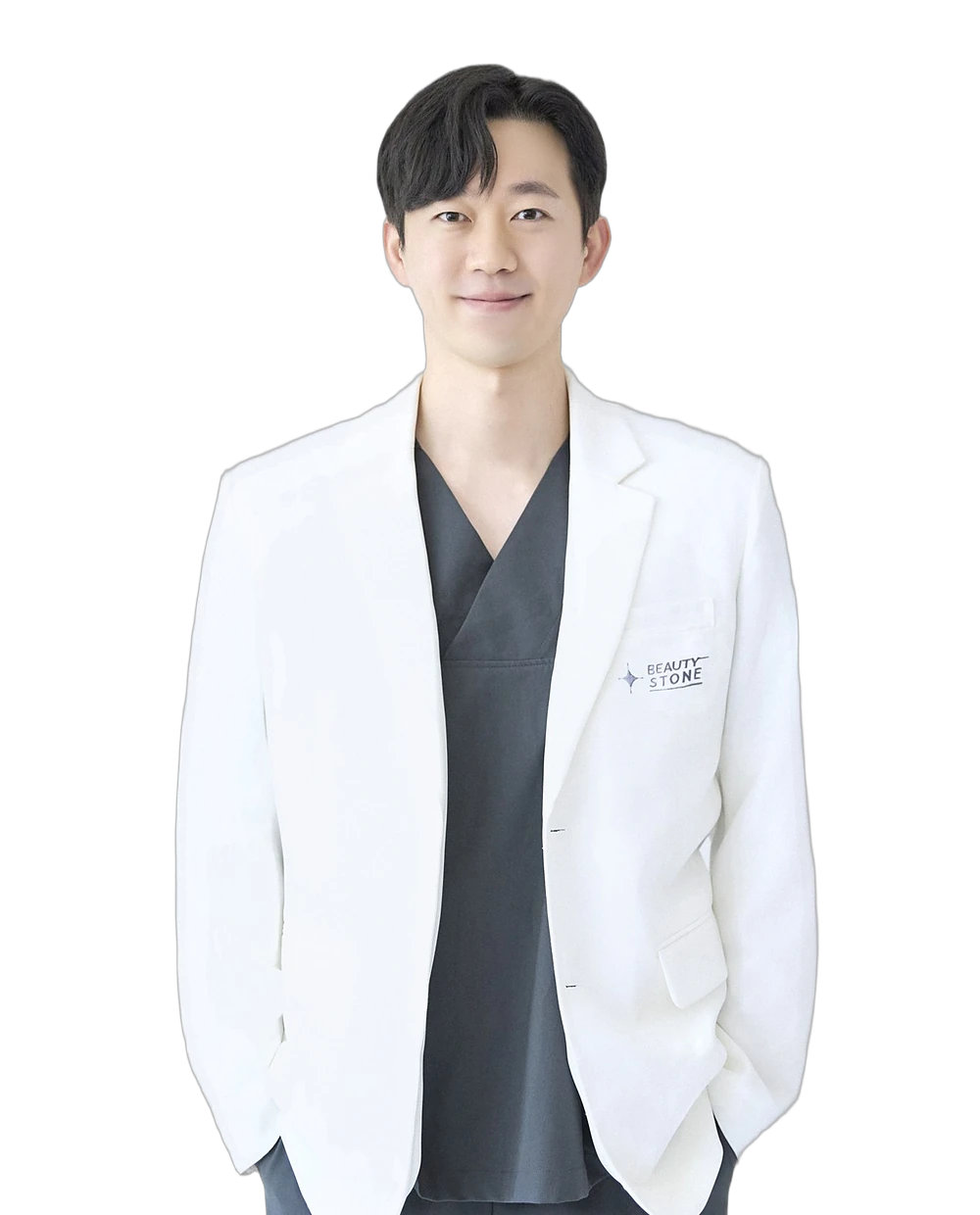
Jangju Kim Senior Director
JANGJU KIM
Dr. Jangju Kim is a clinic director at STON Clinic, LOTTE HOTEL in Myeongdong.
Career / Education
- 현) 스톤클리닉 명동 롯데호텔 원장
- 경희대학교 의과대학 졸업
Comments