


Key takeaways
- How to find what is actually raised when the back of the neck looks fuller
- Why accumulated fat and a rounded upper back call for different approaches
- What the measured angle change looks like after a posture exercise program
- Which photos and records make a consultation genuinely useful
A photo taken from the side is usually how people first notice it. The back of the neck sits higher and rounder than it used to, a shirt collar looks like it's resting on something, and the line from the hairline down to the shoulders no longer runs flat.
The usual next move is to search for neck liposuction. But two people who both describe "a hump at the back of the neck" can need completely different approaches, depending on what is actually raised. Is there genuinely a thick pad of fat sitting there, or has the upper back rounded forward until the bony junction behind the neck simply protrudes? Both are often present at once, so working out which one dominates makes every later decision much simpler.
This guide walks through what actually changes at the back of the neck, how to separate accumulated fat from a rounded posture, and what order the options tend to follow.
This article summarizes treatment information from BeautyStone Clinic in Hongdae, Seoul. Individual results vary, and whether a procedure suits you is a decision to make with a board-certified dermatologist.
Check the Alignment Before the Thickness
Check the Alignment Before the Thickness
When the back of the neck looks raised in a mirror or a photo, what changed is frequently not the layer of fat but the alignment of the bone underneath it. As the upper back rounds forward, the point where the neck meets the back is pushed backward, so the contour reads as a hump even when the fat is exactly as thick as it always was. The UK's National Health Service explains that kyphosis* — a rounded or hunched upper back — is often caused by bad posture, and that the postural type can be corrected by improving how you hold yourself.
Kyphosis: a term for an upper back that curves outward more than usual. It's worth separating the kind that comes from posture from the kind where the shape of the vertebrae themselves has changed.
That suggests an order for checking at home. Stand with your back against a wall and see whether the back of your head, your shoulders and your hips all touch at the same time. If you have to tip your chin up to make the head touch, alignment is carrying most of the weight. Then press the most prominent point with a fingertip and notice whether bone comes up immediately or a soft layer meets your finger first. Finally, lean your upper body forward and see whether the bump becomes more obvious. More obvious when you lean forward points toward bone; unchanged thickness regardless of posture points toward fat.
Fat really does accumulate there in some people. In that case the question doesn't stop at how it looks, which is why checking the site and checking general health belong in the same conversation.
Check the Alignment Before the Thickness
Accumulated Fat and a Rounded Back Are Different Problems
Accumulated Fat and a Rounded Back Are Different Problems
When fat genuinely has built up at the back of the neck, it doesn't behave like fat on the abdomen or the thighs. A surgical report on people with an idiopathic hump described fat in this region as interlaced with thick, vertically oriented fibrous septa* and firmly anchored to the deep cervical fascia. In the same report the average volume removed was 178 milliliters, and the one patient left undercorrected was the one from whom the largest volume had been taken.
Fibrous septa: sheets of connective tissue running vertically through a fat layer. When they're dense, fat releases less readily and the contour is harder to smooth.
General health deserves a look too. A review of people who presented to plastic surgery with a visibly enlarged pad at the back of the neck found hyperlipidemia in 75 percent, hypertension in 66.7 percent and diabetes in 50 percent, with a mean body mass index of 30.15. Three of the twelve received a first metabolic diagnosis only because this change brought them in. The authors recommended that baseline metabolic screening be considered even where no systemic disease is obvious.
| What you notice | What actually shifted | What to check first |
|---|---|---|
| The back of the neck looks raised | Alignment at the neck-to-back junction | Whether the head touches a wall naturally |
| A soft layer meets your finger | Thickness of the subcutaneous fat | Whether bone or padding comes up first |
| It thickened without weight gain | Distribution of body fat | Weight and waist records over the past year |
| Leaning forward makes it sharper | How far the upper back rounds | Upper back curve on a profile photo |
| Neck and shoulders ache by morning | Load on the surrounding muscles | How you sit while looking at a screen |
So the checking order runs alignment, thickness, distribution, movement. Which of those four moved most determines where any correction belongs, even when the complaint sounds identical. If alignment is the dominant change, reducing fat alone won't shift the profile as much as expected.
One more thing worth holding onto: the two feed each other. A rounded back makes the site more prominent, and a prominent site makes a collar press down until you settle into an even more rounded posture. Addressing one side alone is less stable than assigning each a share and working on both.
Why BeautyStone Clinic Starts From Whole-Body Alignment
Why BeautyStone Clinic Starts From Whole-Body Alignment
At BeautyStone Clinic in Hongdae, Seoul, a consultation about the back of the neck begins with the line running from the ear through the shoulder to the upper back, not with the site in isolation. The same thickness reads differently on a rounded back than on a straight one, and identical care can drift back within months if posture stays where it was. So frontal, profile and slightly-leaning views all get recorded before anything gets recommended.
Why BeautyStone Clinic Starts From Whole-Body Alignment
What Order the Options Usually Follow
What Order the Options Usually Follow
The sequence starts with whatever is reversible. Raising a screen to eye level and standing up to straighten the back every half hour or hour carry almost no downside and sit at the front. It isn't dramatic, but it's the base that every later choice is built on.
Exercise aimed at posture comes next. In a randomized trial of 101 adults aged 60 and over, a physical therapist led one-hour group sessions twice a week for three months. The result was that the exercise group's kyphosis measurement fell by 3.8 degrees while the control group's rose by 1 degree, a difference of 4.8 degrees between them. The same trial found the angle measured on radiographs moved only 1.4 degrees, which didn't reach statistical significance. Read that as the visible line responding well ahead of the underlying bony curve.
Reducing the fat itself sits later in the sequence. As noted above, fat here is densely septated and anchored to fascia, so a larger aspirate doesn't reliably mean a better result, and it's difficult to reverse. Reviewing it after alignment, weight and metabolic markers have been checked is the natural flow. If you're taking a thyroid or hormone-related medication, or the area thickened quickly over a few months, identifying the cause comes before any procedure.
What to Bring to a Consultation
What to Bring to a Consultation
The most useful thing to bring is photographs. Frontal, profile and slightly-leaning views shot under the same lighting get used immediately. Adding one profile photo from two or three years ago makes what changed, and by how much, considerably more obvious.
Health records help too. Noting weight change over the past year, waist measurement, and the glucose and lipid figures from a recent check-up speeds up the assessment. If you're on a steroid or a hormone-related medication, mention when it started and how long it's been running. If neck or shoulder pain comes with it, when the pain peaks is useful as well.
Finally, it's worth setting expectations early. Care here is less about erasing the bump in one go and more about assigning alignment and thickness their share and reducing each gradually. Agreeing on that direction upfront makes the view a few months later much easier to live with.
If this raised a question about your own skin
Ask a questionReferences
- kyphosis* — a rounded or hunched upper back — is often caused by bad posture, and that the postural type can be corrected by improving how you hold yourself
- fat in this region as interlaced with thick, vertically oriented fibrous septa* and firmly anchored to the deep cervical fascia — PubMed Central
- hyperlipidemia in 75 percent, hypertension in 66.7 percent and diabetes in 50 percent, with a mean body mass index of 30.15 — PubMed Central
- the exercise group's kyphosis measurement fell by 3.8 degrees while the control group's rose by 1 degree, a difference of 4.8 degrees between them — PubMed Central
Frequently asked questions
Q. Can fixing my posture alone improve a raised back of the neck?
A. If alignment is the dominant cause, there's real room to move. Participants who exercised twice a week for three months in a randomized trial showed a clear reduction in their kyphosis measurement. That said, the curve measured on radiographs in the same trial moved far less, so rather than expecting the bone to change within weeks, compare profile photos across a few months.
Q. Should I get a health check if fat has built up at the back of my neck?
A. It's worth doing once. A review of people who came in for this change found hyperlipidemia, hypertension and diabetes at high rates, and some received their first diagnosis at that visit. If the area thickened over a few months without meaningful weight gain, checking early is especially reasonable.
Q. Does liposuction clear the fat at the back of the neck in one session?
A. It's unlikely to finish in one. Fat here is crossed by thick vertical septa and firmly anchored to the deep fascia, and in the published series the patient with the largest aspirate volume was the one left undercorrected. Which layer gets treated matters more than how much comes out, so confirming the layer at consultation is the useful step.
Q. What should I prepare before a consultation?
A. Bring frontal, profile and slightly-leaning photos taken under the same lighting, plus one profile photo from several years back to make the comparison easy. Mention recent weight change, check-up figures and any medication you're taking. At BeautyStone Clinic that record is what the alignment-versus-thickness assessment is built from.
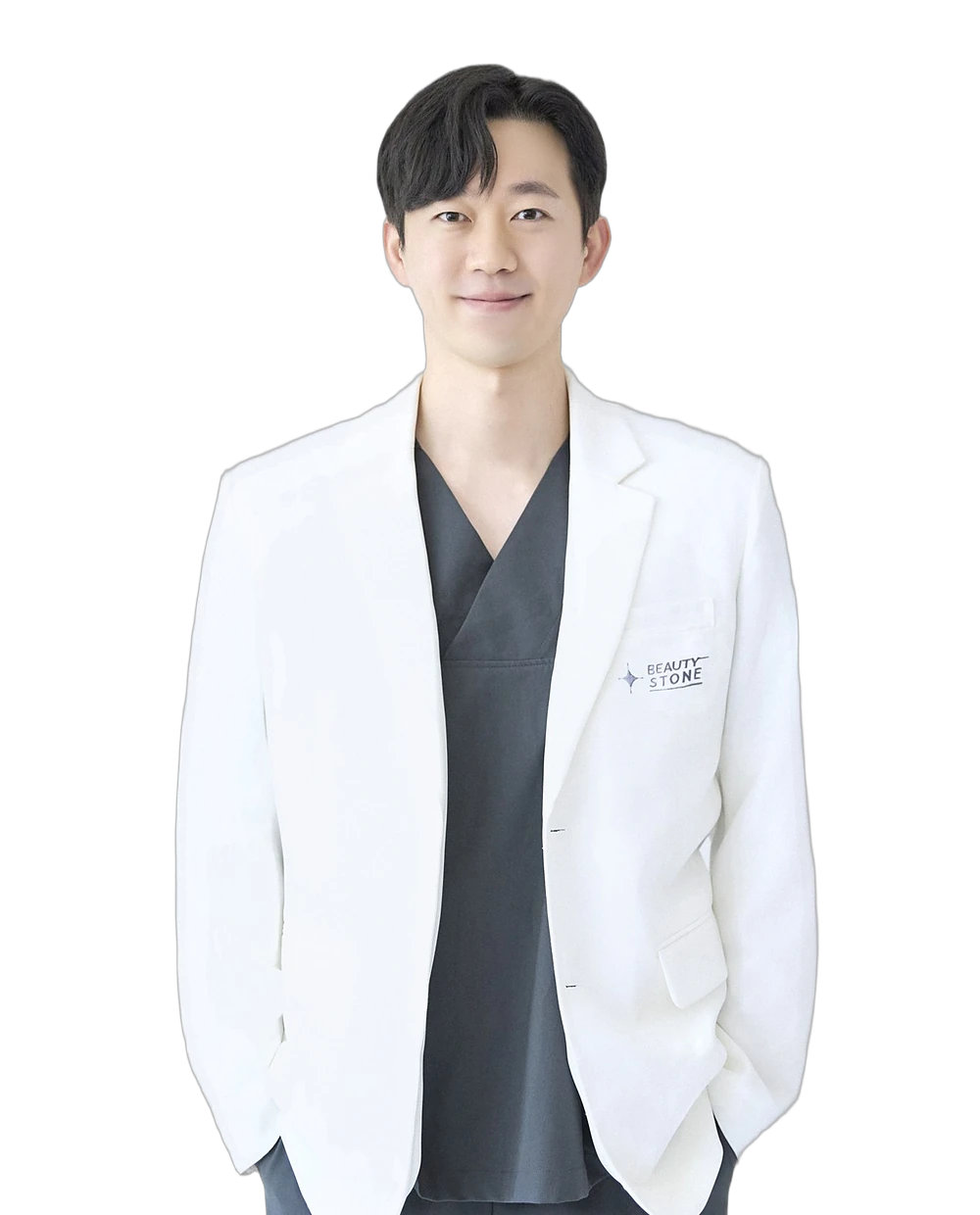
Jangju Kim Senior Director
JANGJU KIM
Dr. Jangju Kim is a clinic director at STON Clinic, LOTTE HOTEL in Myeongdong.
Career / Education
- 현) 스톤클리닉 명동 롯데호텔 원장
- 경희대학교 의과대학 졸업
Comments