


Key takeaways
- Laser is considered for the unibrow zone and stray hairs above the brow, not the brow itself or the skin below it.
- Eye risk: inflammation inside the eye has been reported after eyebrow laser, including in some cases where eye protection was used.
- Sessions: most people need 2 to 6, about 4 to 6 weeks apart.
- Shaping your brows with laser is hard to undo, because hair that's been reduced tends to stay reduced.
If you want laser around your eyebrows, the area between the brows (the unibrow zone) and stray hairs above the brow are where it's usually considered. The brow itself and the skin underneath it are better left to tweezing or threading. Right below the brow, the skin over the eye is thin, and there are reports of laser light reaching the eye from there.
Where Can Laser Hair Removal Go Around the Eyebrows?
Where Can Laser Hair Removal Go Around the Eyebrows?
The line comes down to what sits underneath the skin. Between the brows and above them, there's bone right below, so the laser can be aimed well away from the eye. Once you move below the brow, you're inside the bony rim around the eye socket, and the eyelid skin there is too thin to block the light.
There's another reason the area under the brow is tricky. When you close your eyes, your eyeballs naturally roll upward. Case reports explain that this puts the iris (the colored ring around your pupil) close to the beam when the laser is used right under the brow. The laser targets the dark pigment in hair roots, and the iris carries that same kind of pigment.
Iris: the colored part of the eye that adjusts the size of your pupil to the light.
Where Can Laser Hair Removal Go Around the Eyebrows?
Coarse, dark hairs above the brow take in the light well. If only pale, colorless fuzz is left, it's time to stop and reassess rather than add sessions.
Can You Shape Your Eyebrows With Laser?
Can You Shape Your Eyebrows With Laser?
If your goal is a new brow shape, tweezing or threading is the better place to start. Laser hair removal aims for a long-term drop in the number of hairs that grow back after a course*. That means a brow tail you thin out with laser is hard to bring back when trends change.
Based on the US FDA clearance for the GentleMax Pro Plus
| Method | Does hair grow back? | Can you undo the shape? | Near the eye |
|---|---|---|---|
| Laser hair removal | Fewer hairs return after a course | Hard to undo | Skip the skin below the brow |
| Tweezing | Yes, plucked hairs regrow | Easy | No light involved |
| Threading | Yes, plucked hairs regrow | Easy | No light involved |
| Waxing | Yes, plucked hairs regrow | Easy | Watch for irritation on thin eyelid skin |
If you've kept the same brow shape for years and like it, laser can target just the unibrow hairs and the strays above that line. Redrawing the brow line itself is safer left out of the laser plan.
Do Eye Shields Make Eyebrow Laser Safe?
Do Eye Shields Make Eyebrow Laser Safe?
Eye protection is the first line of defense, but it can't block light that's aimed right at the brow above your eye. A 2022 review of eye injuries from skin laser treatments found 60 cases of direct damage to the eye. Facial laser hair removal accounted for 35 of them (58%), and 44 (73%) involved eye protection that wasn't used properly.
Do Eye Shields Make Eyebrow Laser Safe?
Protection lowers the risk but doesn't erase it. Among 21 reported eye injuries from facial laser treatments, 33% happened even with corneal shields placed on the eye and wavelength-matched goggles in use. That's why the brow itself is usually left out of laser treatment, shields or not.
How Many Laser Sessions Does a Unibrow Need?
How Many Laser Sessions Does a Unibrow Need?
Most people need 2 to 6 sessions, spaced about 4 to 6 weeks apart. Expect around a 10% to 25% reduction after the first one, so a single session often feels underwhelming in the mirror. Individual results vary.
Hair grows in cycles. Too short a gap means fewer hairs are ready for the laser, and too long a gap slows the overall progress. After a full course, many people stay mostly hair-free for months or even years, and some book a maintenance session when a few hairs return. If your skin is tanned right now, check how deep the tan is before booking, and consider letting that session wait.
Eyebrow Area Laser Side Effects: What's Normal and When to Get Help
Eyebrow Area Laser Side Effects: What's Normal and When to Get Help
Redness and swelling are common, often look like a mild sunburn, and usually settle within 1 to 3 days. A cool compress helps, and keep the treated skin out of direct sun while it heals.
Eye injury is rare. In reported cases, symptoms showed up anywhere from 1 day to 1 week after treatment. If you notice any of the following, go to an eye doctor or an emergency room right away, no matter when your next session is:
- Eye pain or a red, bloodshot eye
- Light that makes your eye ache (light sensitivity)
- Blurred vision, or a pupil that looks a different shape
Fitting Unibrow Laser Into a Trip to Seoul
Unless you've had sedation that day, flying home isn't a reason to delay after a laser session between the brows. Redness on the treated skin usually settles within 1 to 3 days.
One visit won't replace a full course. Hair between the brows thins gradually over 2 to 6 sessions spaced 4 to 6 weeks apart, so a single session on one trip is a start rather than a finish.
Once you're home, you can send photos and questions to the clinic on WhatsApp. If you develop eye pain, light sensitivity, or blurred vision, see a local eye doctor first rather than waiting for a reply.
Unibrow or Brow Line: Where Should the Laser Stop?
At a first visit, the doctor looks at your brows from the front and with your eyes closed, then marks where the unibrow hairs end and the brow you want to keep begins. Hairs outside your natural brow line can go on the laser plan, while anything inside the line or under the brow goes to tweezing or threading. If your hair is very coarse or didn't respond well to earlier hair removal, a deeper-reaching wavelength may be worth discussing.
STON Clinic is in Myeongdong, on the 9th floor of Lotte Hotel Seoul near Euljiro 1-ga Station, and consultations are available in English. If you're unsure where your brow line should end, a front-facing photo of your brows sent on WhatsApp is enough to start that conversation.
If this raised a question about your own skin
Quick bookingReferences
- Laser hair removal sessions, side effects, and protective eyewear — American Academy of Dermatology — American Academy of Dermatology
- What to tell your provider and sun care after laser hair removal — American Academy of Dermatology — American Academy of Dermatology
- Eye injuries from skin laser treatments, a case review — Dermatol Surg, 2022 — PubMed Central
- Why eye injuries happen in facial laser treatments and how protection helps — J Clin Aesthet Dermatol, 2018 — PubMed Central
- Eye inflammation and iris damage after eyebrow laser, a case report — Clin Ophthalmol, 2011 — PubMed Central
- Anterior uveitis after eyebrow laser, a case report — J Ophthalmic Inflamm Infect, 2013 — PubMed Central
- GentleMax Pro Plus US clearance and the definition of permanent hair reduction — US FDA — U.S. Food and Drug Administration
Frequently asked questions
Q. Is it enough to close my eyes and cover them with my fingers during eyebrow laser?
A. Closing your eyes and covering them with your fingers isn't enough to protect them during eyebrow laser. In two published cases of eye inflammation after eyebrow laser, both people had their eyes closed or covered with fingers. Proper eye protection matters, and the skin right below the brow is safer left out.
Q. Can eye damage from eyebrow laser heal?
A. Eye damage from eyebrow laser can improve, but some of it lasts. In a 2022 review, 31 of 60 people (52%) with direct eye injury still had symptoms at follow-up. In one case, eye inflammation settled with eye drops, yet thinning of the iris remained.
Q. Is one type of laser safer near the eyebrows?
A. Longer wavelengths and higher energy reach deeper, which raises the risk of eye injury. Still, eye inflammation has been reported after eyebrow treatment with an alexandrite laser, which reaches less deeply. Keeping the area below the brow out of the plan matters more than the laser type.
Q. Does everyone in the room wear eye protection during laser hair removal?
A. Yes, everyone in the room must wear protective eyewear during laser hair removal. Reflected light can reach the eyes of anyone nearby, not just the person being treated. When the face is treated, check together before starting that the eye protection fits properly.
Q. Does laser work on gray brow hairs or light unibrow hair?
A. Gray or light hairs have little pigment for the laser to target, so they won't thin as much as dark hairs. Laser hair removal works best on dark hair over lighter skin. If many of your brow hairs are gray, it's worth discussing what laser can realistically do first.
Q. Can I go back to work right after unibrow laser?
A. Most people return to their usual routine right after unibrow laser. The skin can look red and a little puffy, so avoid direct sun that day. Afterward, use a broad-spectrum, water-resistant sunscreen of SPF 30 or higher, and skip tanning and self-tanners.
Q. Does unibrow laser hair removal hurt?
A. Many people describe laser pulses as warm pinpricks or a rubber band snapping against the skin. The area between the brows is small, so each session is short. Speak up during the session if it feels too strong so the settings can be adjusted.
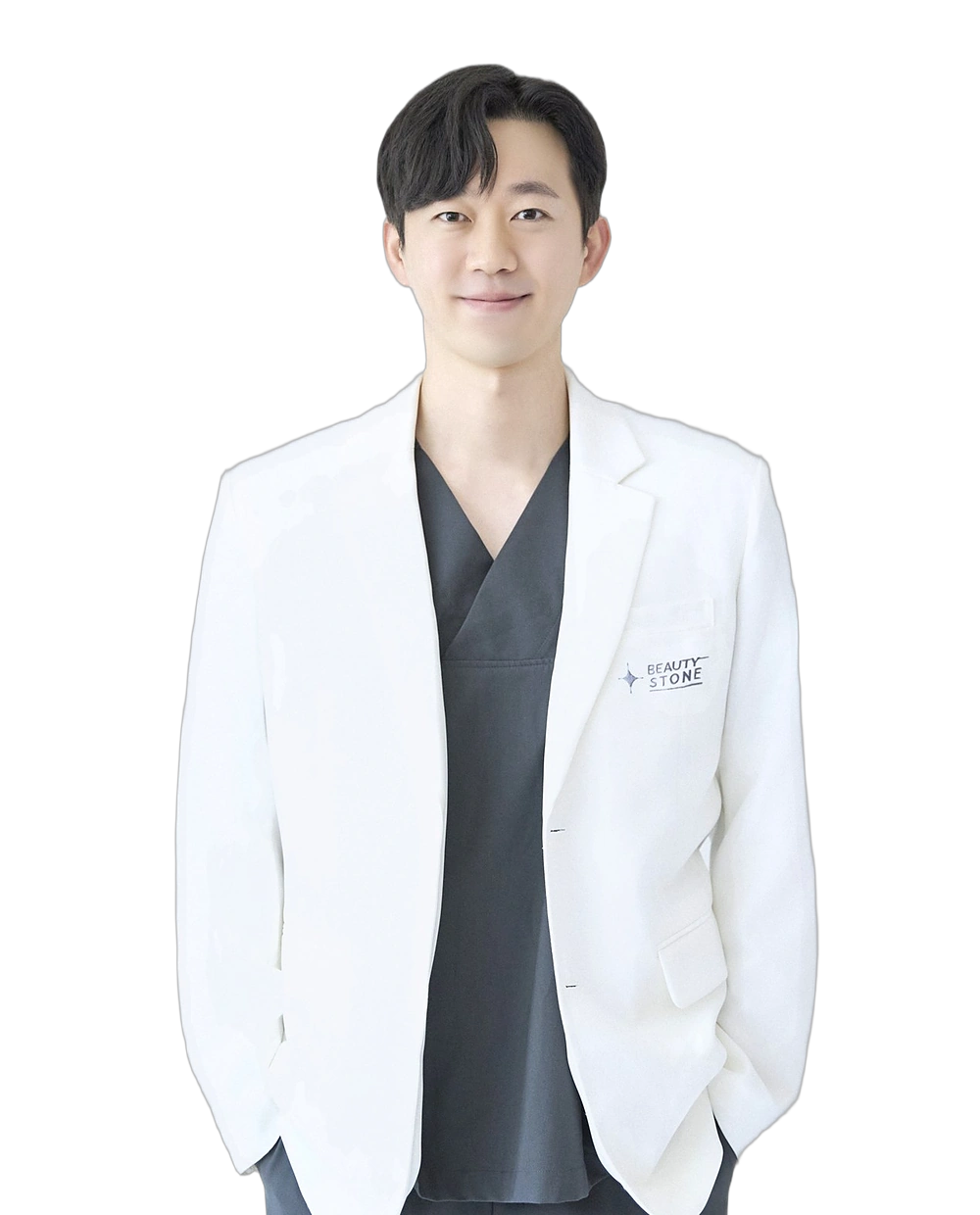
Kim Simon Jang-ju Head Physician
JANGJU KIM
Head Physician Kim Simon Jang-ju practices at STON Clinic, LOTTE HOTEL in Myeongdong (from December 1, 2026).
Career / Education
- Current) Head Physician (practicing at STON Clinic Myeongdong and Beautystone Clinic Hapjeong; Myeongdong from Dec 1, 2026)
- Graduated from Kyung Hee University College of Medicine
Comments