


Key takeaways
- If shaving feels useless after laser, assume shedding first. Don't pluck; just trim the surface with a razor.
- Shedding window: treated facial hair usually falls out within the first week after a session.
- How to shave: wet skin, shaving cream or gel, and strokes in the direction your hair grows.
- When to call: blisters, or pus bumps that keep multiplying, shouldn't wait for your next session.
If your razor seems to stop working a few days after laser hair removal, check first whether you're looking at hairs on their way out rather than new growth. Treated facial hair usually sheds within the first week, and the next session is typically 4 to 6 weeks later. In between, the treated hairs keep working their way up, so skin you shaved in the morning can feel rough again by evening.
Why Is Shaving Hard After Laser Hair Removal?
Why Is Shaving Hard After Laser Hair Removal?
A treated hair doesn't drop out the moment the laser hits it. The heat damages the root, and the leftover hair shaft is pushed out through the skin over several days. On the face, this usually happens within the first week*.
Based on a 2022 review of facial laser hair removal
Shaving during this stretch only cuts the part that's already above the skin. The rest of the shaft is still inside the follicle and keeps rising, which is why you can shave in the morning and see dark dots again by dinner, or run a hand over your jaw and feel stubble you thought was gone. That's shedding, not new hair. Keep in mind, it's also not a sign the laser failed.
During this phase, shaving more often won't make the stubble disappear faster. Waiting for the shed to finish works better than going over the same patch again and again.
Why Is Shaving Hard After Laser Hair Removal?
Shedding Hair or Regrowth: How Can You Tell?
Shedding Hair or Regrowth: How Can You Tell?
The easiest way to tell them apart is the calendar. Tips that surface in the first 1 to 2 weeks after a session are shedding hairs. Hair that comes up evenly a few weeks later, on skin that had looked smooth, is hair that was resting on treatment day.
Hair grows in cycles of growing and resting. On the face, only about 56% to 76% of hairs are in the growing phase at any one time, and that's the phase the laser works best on.
| Hair | When you see it | What it looks like | What to do |
|---|---|---|---|
| Shedding hair | Within about the first week | Dark dots return soon after shaving | Don't pluck; wash gently |
| Red bump around a hair | Around days 5 to 7 (one case) | Red, raised spot where a hair sits | Skip shaving that spot |
| Resting hair coming in | A few weeks later, on smooth skin | Even, new hair growth | Treat it at the next session |
Resting hairs weren't in the laser's best phase, so one session can't catch them all. That's the reason sessions are spaced 4 to 6 weeks apart: the next one targets the hair that has come up since. Individual results vary.
If counting days is hard, snap a photo of the area on treatment day. Take another in the same light once the shedding is done, and you'll see which spots cleared and which have new hair.
Can You Tweeze or Wax Between Laser Sessions?
Can You Tweeze or Wax Between Laser Sessions?
Even if shedding hairs bug you, stick with a razor between sessions instead of tweezers or wax. The laser aims at the pigment (melanin) in the hair root and turns it into heat. Pull the hair out by the root, and there's nothing left for the next session to target. That's why plucking-type hair removal is stopped at least 3 weeks before laser treatment starts.
A shedding hair is already being pushed out after the heat, so it falls out on its own with time. You don't have to pick it.
If you want to speed things along, gently wiping the area with a clean washcloth while you wash is enough. In one published case of laser treatment on the front of the neck, gentle washing like this helped the hairs shed faster, and shedding was complete 2 weeks after treatment. Don't scrub hard or pinch hairs out with your nails.
How to Shave After Laser Hair Removal Without Irritation
How to Shave After Laser Hair Removal Without Irritation
If the area is red and swollen on treatment day, hold off shaving until that settles. Redness and swelling are common and usually fade within 1 to 3 days*.
Based on American Academy of Dermatology guidance
When you do shave again, these steps are gentler on the skin:
- Shave when your skin and hair are wet and soft, like right after a shower.
- Apply shaving cream or gel. If your skin is sensitive, choose one labeled for sensitive skin.
- Shave in the direction your hair grows. Shaving close against the grain makes folliculitis more likely.
- Rinse the blade after every swipe, and swap the blade after 5 to 7 shaves.
- Let your razor dry completely somewhere that isn't wet.
How to Shave After Laser Hair Removal Without Irritation
If it still feels rough, don't go over the same spot again and again. Shedding hair won't all come off with a razor, and extra passes just scrape your skin. Put on a moisturizer before you shave, and a thin layer again afterward to ease tightness.
Folliculitis After Laser Hair Removal: Is It Normal?
Folliculitis After Laser Hair Removal: Is It Normal?
If red bumps pop up around hair openings, skip shaving that spot until they calm down. As a shedding shaft pushes through the skin, the area around it can get inflamed. In the same published case, red bumps and pus bumps appeared 5 to 7 days after treatment and faded on their own over 2 to 4 weeks as the hairs shed.
Don't try to shave the bumps off. Nicking the tops can open the skin and make the inflammation last longer. In the meantime, wash with a gentle cleanser and use a clean towel, and keep the treated skin out of direct sunlight.
Blisters and infections are rare. If you notice any of the following, contact the clinic that treated you right away instead of waiting for your next session:
- Blisters, or skin that's oozing
- Pus bumps that don't shrink after several days and keep multiplying
- Treated skin that becomes more painful and feels hot
- Patches that turn darker, or lighter, than your usual skin color
Fitting Laser Hair Removal Into a Trip to Seoul
Unless you've had sedation that day, flying home isn't a reason to delay after a laser hair removal session. Expect the shedding described above to happen after you're home, since it plays out over the following week or two.
One visit won't replace a full course. Most people need 2 to 6 sessions spaced 4 to 6 weeks apart, so a single session on one trip is a start rather than a finish.
Once you're home, you can send photos and questions to the clinic on WhatsApp. If you develop spreading redness, fever, blisters, or worsening pain, see a local doctor first rather than waiting for a reply.
Shedding or New Growth: What to Check Before Your Next Session
The next session is usually 4 to 6 weeks out. If hair comes back evenly before then, just shave it short with a razor and leave the roots alone. Count from your treatment date: tips that show up within about a week are shedding hairs you can wait out, while even growth a few weeks later, on skin that had gone smooth, is hair for your next session.
STON Clinic is in Myeongdong, on the 9th floor of Lotte Hotel Seoul near Euljiro 1-ga Station, and consultations are available in English. If you can't tell which kind of hair you're looking at, one close-up photo sent on WhatsApp is a good place to start.
If this raised a question about your own skin
Quick bookingReferences
- Results, sessions, spacing, common reactions, and rare side effects of laser hair removal — American Academy of Dermatology — American Academy of Dermatology
- How to shave with less irritation — American Academy of Dermatology — American Academy of Dermatology
- When treated hair sheds and before-and-after care in facial laser hair removal — J Clin Aesthet Dermatol, 2022 — PubMed Central
- Folliculitis around shedding hairs after laser hair removal, a case report — J Clin Aesthet Dermatol, 2020 — PubMed Central
Frequently asked questions
Q. Can I shave every day if my beard feels stubbly after laser?
A. Yes, you can shave your beard daily after laser hair removal once the skin has calmed down. Just avoid shaving close against the grain or going over the same spot several times, since that adds up as irritation. Shave around any red bumps until they settle.
Q. Can I use hair removal cream instead of shaving between sessions?
A. A razor is the better choice between laser sessions. A 2022 review of facial laser hair removal advises stopping waxing, tweezing, and chemical hair removal at least 3 weeks before starting treatment. If your goal is just to keep hair short, shaving does the job.
Q. When can I get a peel or another laser after laser hair removal?
A. On the face, avoid chemical peels and other laser treatments on the same area for at least 2 weeks after laser hair removal, or until your skin has fully healed. The same 2-week gap applies before a session. If redness lingers past 2 weeks, wait a little longer.
Q. Is it a failure if not all the hair falls out after laser?
A. No. Expect about a 10% to 25% reduction after the first session, so a lot of hair can still be there. Results depend on hair color and thickness, the treated area, the type of laser, and your skin color. Most people need 2 to 6 sessions, and progress is easier to judge session by session.
Q. Should I postpone my session if I'm tanned?
A. If your skin is tanned, check how deep the tan is before booking, and consider letting that session wait. A 2022 review of facial laser hair removal advises waiting 2 weeks after a sunburn or tan. Laser on tanned skin heats the skin's pigment too, which raises the risk of burns.
Q. How should I shave before my next laser session?
A. Before your next laser hair removal session, shave the area short with a razor. The 2022 review of facial laser hair removal also advises shaving before treatment. Avoid plucking or waxing between sessions, because hair pulled out by the root leaves nothing for the laser to target.
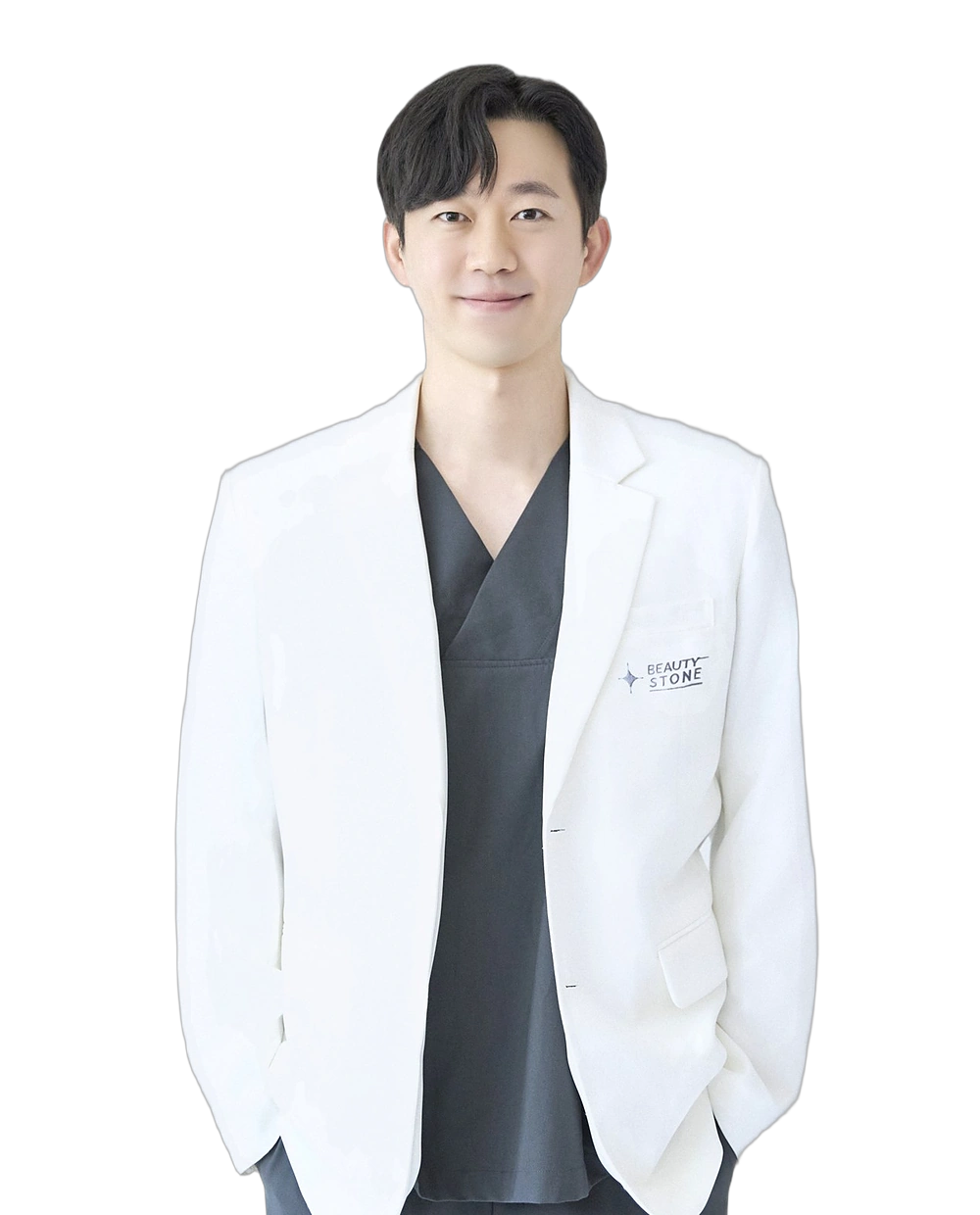
Kim Simon Jang-ju Head Physician
JANGJU KIM
Head Physician Kim Simon Jang-ju practices at STON Clinic, LOTTE HOTEL in Myeongdong (from December 1, 2026).
Career / Education
- Current) Head Physician (practicing at STON Clinic Myeongdong and Beautystone Clinic Hapjeong; Myeongdong from Dec 1, 2026)
- Graduated from Kyung Hee University College of Medicine
Comments