


Key takeaways
- Juvederm: a family of crosslinked hyaluronic acid (HA) gels; in the US, each gel has its own approved area and depth.
- Juvelook: PDLLA microspheres carried in non-crosslinked HA, a material grouped with collagen stimulators.
- How each is meant to act: an HA gel fills the space it is placed in, while PDLLA is described as prompting the body's own collagen response.
- What this does not cover: which works better, how long either lasts, pain or price.
Juvederm is a family of crosslinked hyaluronic acid gels, and in the US each gel is approved for its own area and depth, while Juvelook is PDLLA beads in non-crosslinked hyaluronic acid which STON Clinic's Juvelook page summarizes as approved for temporary improvement of facial wrinkles in adults. You could compare the two on several points, but this article sticks to one: what each product is made of and the use it is approved or designed for. It does not rank them or compare results.
Which product, if either, fits an area is decided at an exam. The details below describe materials and approval wording, not what will happen in your skin.
What Is Juvederm Made Of?
What Is Juvederm Made Of?
Juvederm is a brand name for several hyaluronic acid gels from Allergan. A study of filler gel properties described Juvederm Ultra, Ultra Plus and Voluma among the FDA-approved, cross-linked, non-animal hyaluronic acid filler products it tested. Different Juvederm gels use different crosslinking methods; for example, Voluma is listed as a Vycross hyaluronic acid.
The point of having several gels is fit to the tissue. The same paper set out to give a rationale for selecting appropriate products for volume replacement within different tissue levels and anatomical zones. So "Juvederm" on its own does not tell you which gel, layer or area is meant.
What Is Each Juvederm Gel Approved For in the US?
What Is Each Juvederm Gel Approved For in the US?
The FDA approves each gel for a specific use. These are the US approvals cited here; later FDA supplements can add uses, as the under-eye one did. Juvelook is not in this US table; its approval wording below comes from STON Clinic's page.
| Juvederm gel | US approved use (approvals cited here) | Layer or area named in the approval |
|---|---|---|
| Juvederm Ultra XC / Ultra Plus XC | Moderate to severe facial wrinkles and folds, such as nasolabial folds | Mid to deep dermis |
| Juvederm Voluma XC | Cheek augmentation for age-related midface volume loss, adults over 21 | Deep: under the skin and/or on the bone |
| Juvederm Volbella XC | Lip augmentation and lines around the mouth, adults over 21; later expanded to under-eye hollowing | Lips; under-eye area |
The Ultra XC and Ultra Plus XC approval was for adding 0.3% lidocaine to Juvederm Ultra and Ultra Plus. That is an ingredient fact, not a claim about how a session feels.
What Is Juvelook Made Of?
What Is Juvelook Made Of?
Juvelook is a Korean product, described in one paper as PDLLA-HA made by VAIM, Korea. A published under-eye study lists it as 42.5 mg of spherical PDLLA with 7.5 mg of non-crosslinked hyaluronic acid. PDLLA is a form of polylactic acid; a paper comparing polylactic acid injectables explains that it splits into PLLA and PDLLA by stereoisomer structure and places Juvelook among the PDLLA products.
The HA in Juvelook plays a different role from the HA in Juvederm. Several polylactic acid products use CMC as the carrier, while Juvelook uses non-crosslinked HA, so the HA carries the beads. It is also prehydrated before use: in that under-eye study, PDLLA-HA 50 mg was prehydrated with 6 mL of saline for at least 24 hours before injection. That was one study's method, not a fixed recipe.
How Is Each Material Meant to Work?
How Is Each Material Meant to Work?
A crosslinked HA gel takes up space where it is placed. PDLLA works through a reaction instead. A review of collagen-stimulating injectables says these materials set off a controlled inflammatory response with macrophages, and that PLLA and PDLLA shift macrophages toward a repair type and raise type I and III collagen. The review notes it pooled mixed, mostly non-comparative studies without a formal bias assessment.
How Is Each Material Meant to Work?
What Is Juvelook Approved For?
What Is Juvelook Approved For?
According to STON Clinic's Juvelook page, the approval covers placing polylactide and hyaluronic acid under the skin for physical repair, with temporary improvement of facial wrinkles in adults as its widest stated aim. The page does not name a country, so read it as one stated purpose for the whole product, not a gel-by-gel list like the US Juvederm approvals above.
Juvelook also comes in more than one version, and the layer follows the version. A smile-line study placed Juvelook as intradermal injection, while a Juvelook Volume study used a superficial fat injection technique with a highly diluted mix. These are study methods, not a plan for any one person.
What Safety Point Applies to Both?
Both are injected into the face, so the same warning signs matter. The FDA says the most concerning risk with dermal fillers is unintentional injection into a blood vessel, which can lead to tissue death, vision problems including blindness, or stroke. Seek care right away for unusual pain, vision changes, or white, gray or blue skin near the injection site.
What Safety Point Applies to Both?
STON Clinic's Juvederm and Juvelook Pages
STON Clinic offers both. Its Juvéderm page describes an injectable filler whose main ingredient is hyaluronic acid, where whatever volume goes in becomes volume at that spot, and notes that HA filler can be dissolved with a hyaluronidase injection. Its Juvelook Volume page says that version behaves unlike a hyaluronic acid filler, where the injected volume is itself the volume, and its Juvelook page notes the texture version goes into the dermis and the volume version deeper, with the layer settled at your visit. You'll find STON Clinic in Myeongdong, on the 9th floor of Lotte Hotel Seoul's Main Tower, near Euljiro 1(il)-ga Station on Line 2.
If this raised a question about your own skin
Ask a questionReferences
- FDA-approved, cross-linked, non-animal hyaluronic acid filler products — PubMed Central
- Moderate to severe facial wrinkles and folds, such as nasolabial folds — U.S. Food and Drug Administration
- Cheek augmentation for age-related midface volume loss, adults over 21 — U.S. Food and Drug Administration
- Lip augmentation and lines around the mouth, adults over 21 — U.S. Food and Drug Administration
- expanded to under-eye hollowing — U.S. Food and Drug Administration
- PDLLA-HA made by VAIM, Korea — PubMed Central
- 42.5 mg of spherical PDLLA with 7.5 mg of non-crosslinked hyaluronic acid — PubMed Central
- splits into PLLA and PDLLA by stereoisomer structure — PubMed Central
- set off a controlled inflammatory response with macrophages — PubMed Central
- superficial fat injection technique with a highly diluted — PubMed Central
- the most concerning risk with dermal fillers is unintentional injection into a blood vessel — U.S. Food and Drug Administration
Frequently asked questions
Q. Juvelook vs Juvederm: what is each one used for?
A. Juvederm is a family of crosslinked HA gels, and in the US each gel is approved for its own use, such as folds, cheeks or lips. Juvelook is PDLLA beads in non-crosslinked HA, and STON Clinic's Juvelook page summarizes its approval as temporary improvement of facial wrinkles in adults.
Q. Is Juvelook a type of Juvederm?
A. No. Juvederm gels come from Allergan, and Juvelook is a PDLLA-HA product from VAIM in Korea. They are built from different materials and are meant to act in different ways.
Q. Is there one Juvederm for every area?
A. No. In the FDA approvals cited here, Juvederm Ultra XC is approved for wrinkles and folds in the mid to deep dermis, Voluma XC for deep cheek augmentation, and Volbella XC for the lips and lines around the mouth and, later, under-eye hollowing. Later FDA supplements can add uses, as the under-eye one did.
Q. Why does Juvelook contain hyaluronic acid if it is not an HA filler?
A. In Juvelook the non-crosslinked HA acts as the carrier for the PDLLA beads. The PDLLA is the part described as prompting a collagen response.
Q. Which one is better, Juvelook or Juvederm?
A. This article does not rank them. They are different materials with different approved uses, and which one, if either, suits your concern and area is decided after an exam.
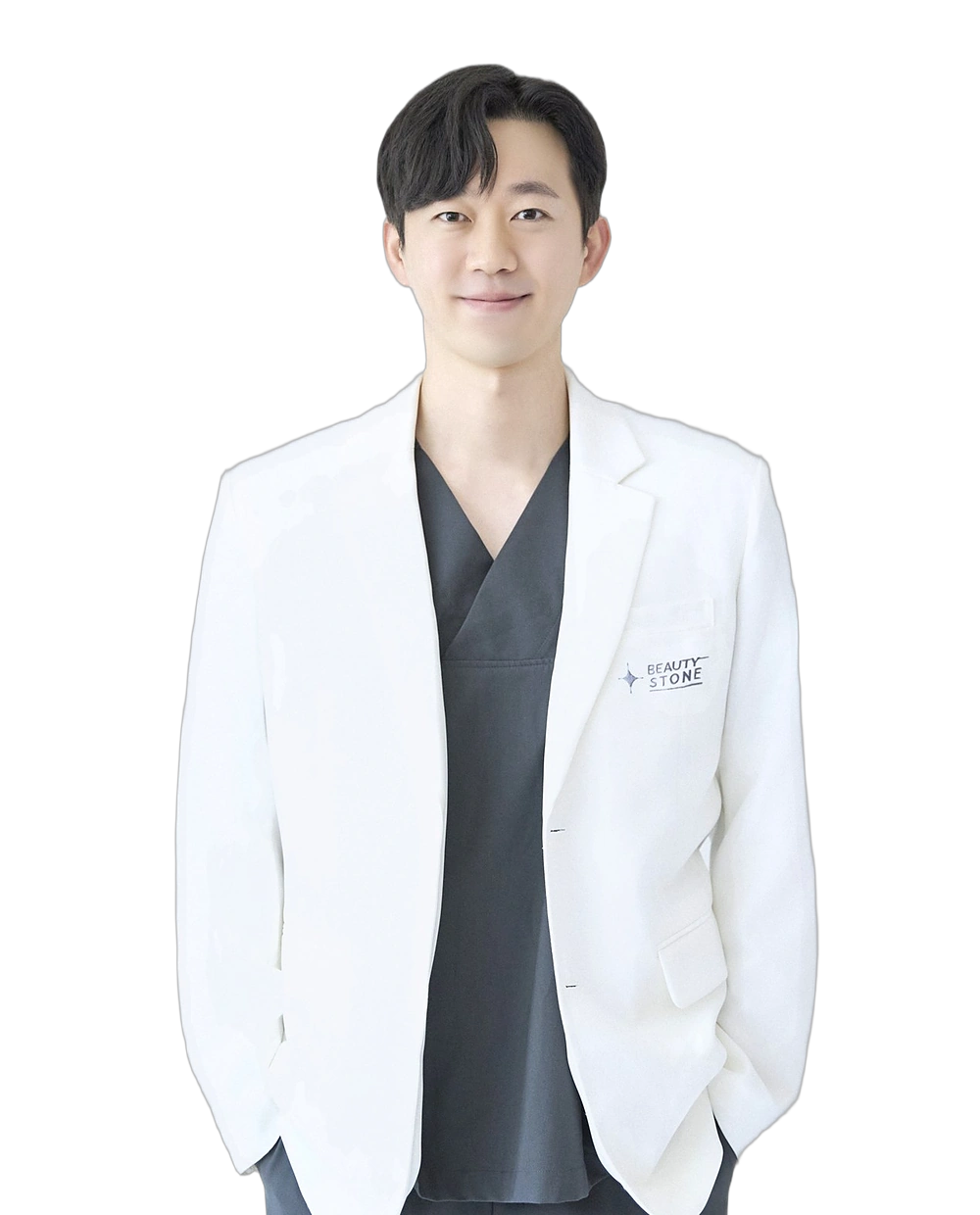
Jangju Kim Senior Director
JANGJU KIM
Dr. Jangju Kim is a clinic director at STON Clinic, LOTTE HOTEL in Myeongdong.
Career / Education
- Current) Director of STON Clinic, LOTTE HOTEL Myeongdong
- Graduated from Kyung Hee University College of Medicine
Comments