


Key takeaways
- In your 20s, Shurink makes sense when you can see sagging. If it's cheek fat, puffiness, or texture, find the cause first.
- Prevention: we found no study that compared early HIFU with no treatment years later.
- Daily sunscreen is the one habit with randomized evidence for slowing skin aging.
- If you do get it: changes show up gradually over 2 to 6 months, so don't judge it in the mirror right away.
If your jawline or cheeks have actually started to drop, Shurink is worth a look in your 20s. If the real issue is cheek fat, puffiness, or skin texture, sort out the cause first. The HIFU studies we checked enrolled people aged 25 to 60 and 37 to 75, and none looked at people in their 20s on their own. There's also no study comparing people who had it "early" with people who didn't, years later.
Is Shurink Worth It in Your 20s If Nothing Sags Yet?
Is Shurink Worth It in Your 20s If Nothing Sags Yet?
If there's barely any sagging, there's not much for Shurink to change. HIFU (high-intensity focused ultrasound) has been used to tighten mild to moderate laxity in the skin and the tissue underneath. It focuses ultrasound at a set depth below the surface, creating tiny heat points, and your body builds new collagen there over the following months.
That's why a face with almost no laxity has little room to tighten, and you may not notice much after treatment. Shurink (Ultraformer MPT) is one HIFU device built on this approach.
People who tend to see clearer results from non-surgical skin tightening have a small amount of sagging skin. A healthy, stable weight, not smoking, drinking little alcohol, and protecting your skin from the sun are on the same list.
When someone in their 20s comes in about a "blurry jawline," the first step is checking whether cheek fat, fullness under the chin, morning puffiness, or skin texture stands out more than sagging. None of those four is what heat points are designed to tighten.
Fat, Puffiness, or Sagging: What's Blurring Your Jawline?
Fat, Puffiness, or Sagging: What's Blurring Your Jawline?
Start with when and in what position your face looks different, rather than a single mirror check. The table below follows the order a doctor usually checks.
| Concern | What you see | What to check first |
|---|---|---|
| Cheek fat | Your lower cheeks look full even when you're not smiling | How much fat there is and where |
| Under-chin fullness | A fold appears under your chin when you look down | Fat thickness under the chin |
| Puffiness | Your face looks different in the morning and evening | Compare photos across the day |
| Skin texture | Pores and fine lines stand out first | Surface skin care and sun protection |
| Sagging | The end of your jawline drops and the line breaks | HIFU lifting such as Shurink |
Only the last row points to Shurink. Cheek fat and under-chin fullness are about fat volume, so expecting heat points to fix them often leads to disappointment. Puffiness rises and falls within a day, and texture lives in the top layers of skin, far from the deep layer HIFU aims at.
Your 20s face is also built differently in depth. In ultrasound data from 200 Korean patients aged 19 to 76, the superficial fat layer got thinner with age. In younger people with fuller faces, the SMAS sat deeper.
SMAS: a thin sheet of tissue covering the facial muscles. It's the deep layer that ultrasound lifting tries to tighten.
Fat, Puffiness, or Sagging: What's Blurring Your Jawline?
So the depth used on an older face shouldn't simply be copied onto a face in its 20s. Before treatment, a diagnostic ultrasound measures your skin, fat, and SMAS thickness, and that measurement sets how deep the heat goes.
Does Getting Shurink Early Prevent Aging?
Does Getting Shurink Early Prevent Aging?
There's no evidence yet that tracks this over years. A review that pooled 17 HIFU studies with 477 people found a moderate effect, and most of those studies didn't report long follow-up.
The people studied were also older than most readers asking this question. One study that followed 20 people for a year enrolled ages 25 to 60, and a Korean study of 20 patients covered ages 37 to 75.
Does Getting Shurink Early Prevent Aging?
So "get it early and you'll age slower" is a hope, not a finding. Individual results vary, and nobody can tell you today how your face would look at 35 with or without HIFU at 25.
What Actually Slows Skin Aging in Your 20s?
What Actually Slows Skin Aging in Your 20s?
Daily sunscreen is the habit with the strongest evidence. In a randomized trial of 903 adults under 55 followed for 4.5 years, people who used sunscreen every day showed 24% less skin aging than those who used it when they felt like it. That trial measured fine surface texture, though, not sagging.
Sagging seems to follow a different path. When facial aging signs are split into wrinkles and texture, sagging, pigment, and blood vessels, sagging was linked more to age than to sun exposure. Sun protection mainly helps with wrinkles, texture, and pigment.
If you want to do one thing now, daily sunscreen comes before Shurink. Keeping your weight steady and not smoking are also on the list of things that help skin-tightening results later.
Slim Cheeks? What to Check Before Shurink
Slim Cheeks? What to Check Before Shurink
If your cheeks are already slim, check whether you're dealing with sagging or volume loss before adding more Shurink shots. If your face looks droopy because of hollowness, look at restoring volume before Shurink. In the same Korean ultrasound data, the SMAS sat closer to the surface in slimmer faces, so the heat depth needs extra care.
The superficial fat layer tends to thin with age. If your face is naturally slim in your 20s, taking clear photos now may be more useful for future decisions than tightening now.
Postpone treatment in these situations:
- You're pregnant
- There's a skin infection where you'd be treated
- You take certain medications that may not be compatible with treatment*
Based on American Academy of Dermatology patient guidance
What's Normal After Shurink, and When to Call
Results don't appear right away. With one treatment, most people see modest lifting and tightening over 2 to 6 months. Any change in face size right after treatment is closer to swelling, so judge from photos taken later.
Redness and swelling are common. In 28 women aged 33 to 55 who had one treatment, both cleared within a week. More sessions may help some people, but we found no interval set specifically for people in their 20s.
Serious reactions are rare but have been reported. If you notice any of these, contact the clinic where you were treated right away, no matter how many days it's been:
- Blisters where you were treated
- Broken skin that oozes
- A dent where swelling has gone down
Planning Around a Trip to Seoul
Flying home isn't a reason to postpone Shurink, unless you had sedation that day. Swelling during your stay isn't the result, so photos from your trip won't show what Shurink did for you.
Unlike filler, Shurink doesn't change your shape on the spot. Most people look gradually closer to how they used to, not suddenly different, and one visit isn't a promise of a certain result. The photos you take at home over the next few months tell you more.
Once you're home, you can send photos and questions to the clinic on WhatsApp. If you notice blisters, oozing, or a dent, see a local doctor first rather than waiting for a reply.
How Can You Tell What You Actually Need?
If you can't tell whether your jawline is sagging or just full, take a side-profile photo in the morning and another in the evening, in the same light, for a few days. If the line changes within the same day, it's puffiness. If it stays the same, measuring your layer thickness with a diagnostic ultrasound is the next step. STON Clinic is in Myeongdong, on the 9th floor of Lotte Hotel Seoul near Euljiro 1-ga Station, and you can send those photos before deciding.
If this raised a question about your own skin
Quick bookingReferences
- Who's a good candidate for ultrasound skin tightening and when results show — American Academy of Dermatology — American Academy of Dermatology
- Skin, fat, and SMAS thickness of the lower face in 200 Korean patients — Dermatol Surg, 2022 — PubMed Central
- Review of 17 HIFU studies on face and neck results and safety — Lasers Med Sci, 2020 — PubMed Central
- Daily sunscreen and skin aging over 4.5 years, randomized trial — Ann Intern Med, 2013 — PubMed Central
- Sun exposure and visible signs of facial aging — Clin Cosmet Investig Dermatol, 2013 — PubMed Central
- 20 people followed for a year after face and neck HIFU — J Clin Aesthet Dermatol, 2016 — PubMed Central
- Ultherapy results at 3 and 6 months in 20 Korean patients — Ann Dermatol, 2015 — PubMed Central
- Face volume over 12 months after one HIFU session — Aesthetic Plast Surg, 2025 — PubMed Central
- Review of 42 Ultherapy studies on results and safety — Aesthet Surg J, 2025 — PubMed Central
- Lower-face results and pain at 3 months in 93 patients — Aesthet Surg J, 2014 — PubMed Central
- Rare serious reactions after ultrasound skin tightening — Lasers Surg Med, 2018 — PubMed Central
Frequently asked questions
Q. Is HIFU safe in your early 20s?
A. The American Academy of Dermatology doesn't list being in your early 20s as a reason to avoid skin tightening. The reasons it lists are pregnancy, a skin infection, and certain medications. The youngest participant in the HIFU outcome studies we checked was 25, so the deciding factor is whether your jawline has actually dropped.
Q. Can Shurink get rid of cheek fat in your 20s?
A. If losing cheek fat is your goal, look at how much fat you have before Shurink. In one study of 28 women, face volume dropped most at 3 months, but they were 33 to 55 and the study measured tightening. There's little evidence for expecting the same change in a 20-something's cheeks.
Q. Will Shurink make my cheeks look hollow later?
A. A sunken look after Shurink is rarely reported. A case series of 5 patients included areas that sank after swelling went down following HIFU. In slimmer faces the heat depth needs more care, so measuring your layer thickness first matters.
Q. Can sunscreen alone prevent sagging?
A. Sunscreen's proven benefit is mostly for fine lines and texture. In a comparison of 298 women aged 30 to 78, sagging didn't differ between sun-seekers and sun-avoiders and was linked more to age. Sagging needs to be watched separately from sunscreen use.
Q. How long does Shurink HIFU last if you get it in your 20s?
A. We couldn't find any duration data for people in their 20s. In a review of 42 Ultherapy studies, the longest follow-up was about 1 year, and roughly 8 in 10 studies ended within 6 months. After a year, comparing your own photos is the only way to tell.
Q. Does Shurink HIFU hurt?
A. Across pooled HIFU studies, pain during treatment averaged about 4 out of 10. In a study of 93 people treated on the lower face, the area under the jaw was rated a bit more painful than the cheeks. Deciding in advance whether to include under the jaw helps.
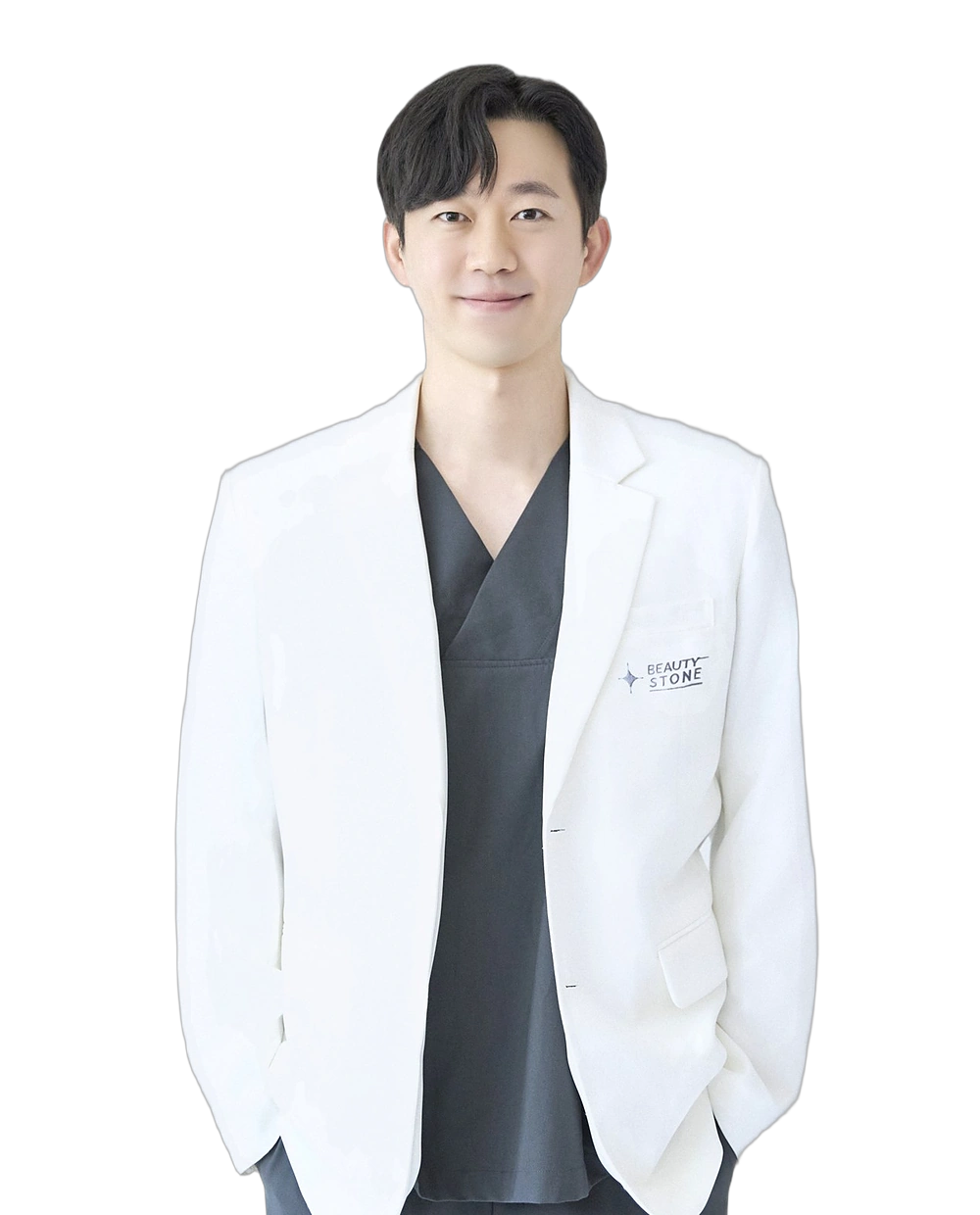
Kim Simon Jang-ju Head Physician
JANGJU KIM
Head Physician Kim Simon Jang-ju practices at STON Clinic, LOTTE HOTEL in Myeongdong (from December 1, 2026).
Career / Education
- Current) Head Physician (practicing at STON Clinic Myeongdong and Beautystone Clinic Hapjeong; Myeongdong from Dec 1, 2026)
- Graduated from Kyung Hee University College of Medicine
Comments