
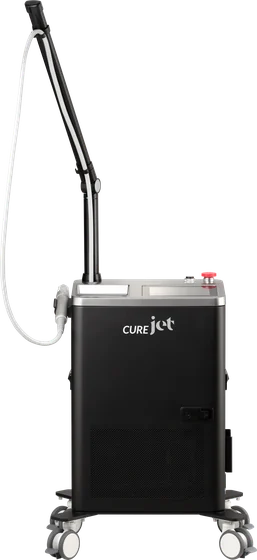
CureJet · Shallow texture
A method that delivers a solution into the skin as a very fine spray. The doctor decides what goes in.

Wrinkles call for different approaches depending on the layer where they form. At your exam, we first check whether it is thinning texture, an expression line or a hollow groove.
From the surface down: epidermis, dermis, subcutaneous fat, muscle and bone. A wrinkle may form in one of these layers, or several layers may form it together. So the single word 'wrinkle' covers quite different problems.
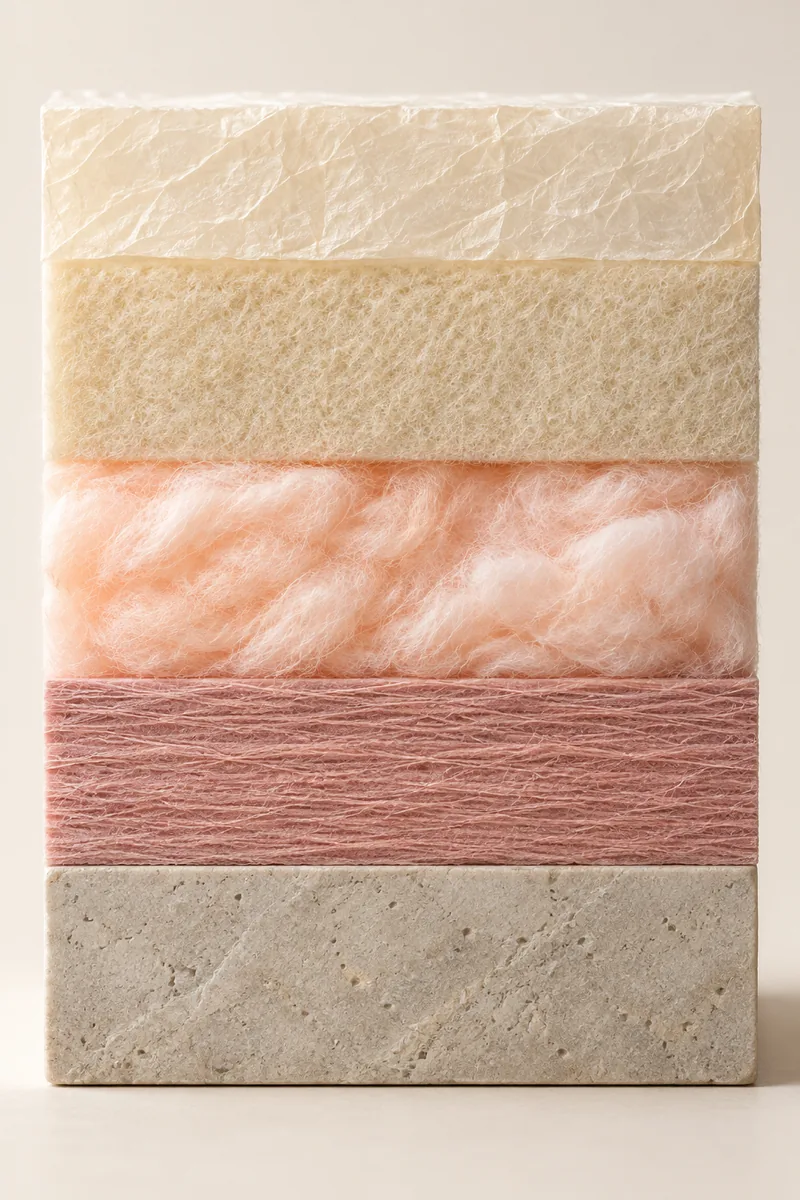
An AI-generated image used as a metaphor.
Thinning. As skin thins, fine lines show on the surface first. These are the ones that fade when you stretch the skin by hand.
Folding. Smiling and frowning crease the same spot again and again. At first the line shows only with expression; later it stays even at rest.
Sagging. When the supporting tissue loosens, the skin moves downward. A groove forms where it settles.

Hollowing. When volume in a deeper layer shrinks, the surface above sinks in. A shadow falls along the hollow edge and reads as a line.
An AI-generated image used as a metaphor.
This check is not a diagnosis. Answers often point to two or more causes, and we look at that combination in person at your exam.
The nasolabial fold is described as a wrinkle formed together by muscle, superficial fat, ligaments, deep fat and the upper jawbone.[1] Even with the same fold, we first look at which layer plays the bigger part.
The frontalis is the main muscle that raises the eyebrows.[2] If heavy eyelids mean you use your forehead to open your eyes, botulinum toxin injections in the forehead can reveal drooping eyelids. So before looking at forehead lines, we also check how you open your eyes.
A different layer simply calls for a different material. At STON Clinic, we sort it this way, from shallow texture to deep hollows.
This order is based on the layer where the wrinkle starts. It may differ from how deep the needle goes.
A method that delivers a solution into the skin as a very fine spray. The doctor decides what goes in.
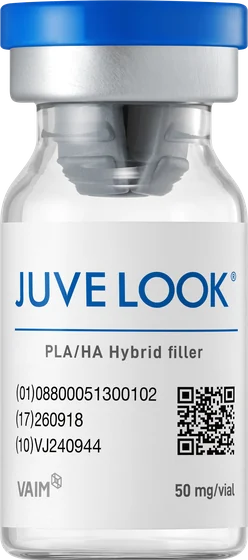
An injection with PDLLA that prompts collagen production. The smaller type is used for shallow, thin areas, the larger for deeper, wider ones. If it's your first time and you're unsure, you can start with a small amount and build up gradually.

A hyaluronic acid filler that directly fills an empty area. It is made for shallow lines.
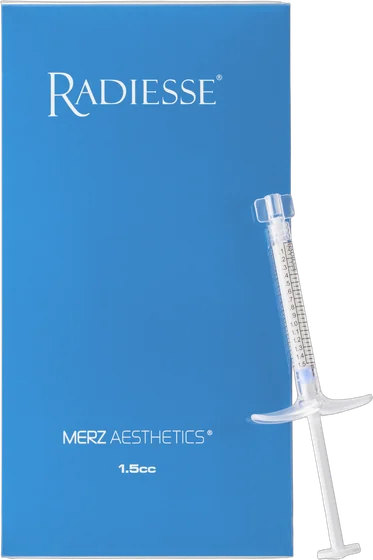
An injectable implant of calcium microspheres (CaHA) in a gel. It is used to fill deep wrinkle grooves. Because it cannot be dissolved, first-timers can start with a small amount and build up gradually.
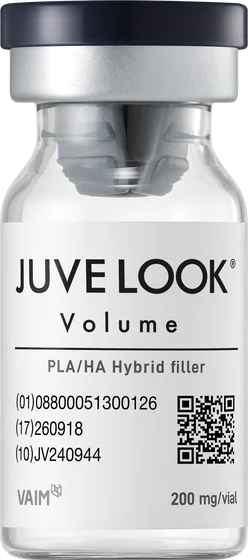
For the deep layer, we consider Radiesse and Juvelook Volume together. What to use, and how much, is decided at your exam.
If sagging looks like the main cause, we don't recommend relying on the injections in this map alone.
| Item | Direct filling | Collagen stimulation |
|---|---|---|
| Material | Belotero Soft (hyaluronic acid), Radiesse (CaHA) | Juvelook (PDLLA) |
| How it works | The material itself creates height in the empty area. | It uses the response that forms collagen. |
| When change shows | The filled height is usually checked on the day of treatment. | It appears over time. It depends on how hollow and deep the area is, but you'll usually visit twice. |
| Reversing | Hyaluronic acid can be dissolved with an enzyme. Radiesse cannot. | If you're unsure at first, you can start with small amounts spread over sessions. |
| Also consider | Around the mouth, forehead and nasolabial folds, where blood vessels run, the same caution applies even with a dissolvable material. | You start knowing in advance how long the results take to show. |
Radiesse fills height, and a collagen-forming response also takes place where it is placed.
CureJet is a delivery method, so which column it falls under depends on the solution used.
Product names come after that.
Even if you arrive with a product in mind, we'll talk it through again if the exam points to a different layer. Let's start with those questions together.
With a filler, the material itself creates height in the empty area. Juvelook, often called a collagen injection, uses PDLLA to draw on the response that forms collagen. Which one suits you is decided at your exam, based on the layer where the wrinkle formed.
With direct-filling fillers, the height is usually checked on the day of treatment. Collagen-stimulating methods like Juvelook change over time. How long it lasts depends on the product, the area and the amount used. At your exam, we'll explain based on your area.
It depends on how hollow and deep the area is, but you'll usually visit twice. The cost varies with the material and amount used. When you get a quote, ask how many visits it is based on.
How it feels varies by person and area. If it's your first time and you're unsure, you can start with a small amount and build up gradually. We also decide together on ways to ease discomfort before treatment.
Bruising or swelling may occur at the injection site. So if you have an important event coming up, mention it first when booking. Blood vessels run through the mouth area, forehead and nasolabial folds, so the same caution applies with any material.
We hear the name you chose first. If the exam shows the wrinkle comes from a different layer, we'll explain why and talk it over again. You can decide after hearing the explanation.
9F, Main Tower, Lotte Hotel Seoul, 30 Eulji-ro, Jung-gu, Seoul. You can check the map through the directions link on this page.
Information checked on: