


Key takeaways
- What holds a scar down: a 2022 review of subcision trials describes cutting fibrotic strands under the scar so that the sunken scar can rise.
- How subcision does it: a needle or blunt cannula is moved back and forth under the scar; a 2023 review groups the tools into sharp, blunt and energy-assisted ones.
- How CUREJET does it: no needle goes in; a high-pressure liquid jet enters the skin, and a 2025 study of 20 people with neck folds used it to break up adhesions under the skin.
- Depth is a known limit: in 25 people treated with CUREJET for stretch marks, injection depth varied considerably between people.
- Head-to-head evidence is thin: none of the studies cited here compared CUREJET itself with subcision.
CUREJET and subcision are both used on a sunken acne scar that is held down from below, but they loosen it in different ways: in subcision, a needle or blunt cannula is placed under the scar and moved back and forth to cut the fibrous strands, while CUREJET uses no needle and sends a high-pressure jet of liquid into the skin. In one clinic's study on neck folds, that jet was used to break up adhesions under the skin.
The two can also differ in what is injected and how many sessions are planned, but this article follows one thread: how each one loosens the scar. It is not a ranking or a recommendation, and the studies below were done under their own conditions, not at STON Clinic.
What Holds a Sunken Scar Down?
What Holds a Sunken Scar Down?
A 2022 review of 16 subcision trials describes subcision as an intervention in which a needle or blunt cannula is inserted under the scar and moved back and forth to cut fibrotic strands and form new connective tissue, so that the atrophic, sunken scar rises. In other words, the strands under some pitted scars act like tethers that hold the surface down.
That is the shared target of both methods in this article. What differs is the tool that reaches those strands: a solid instrument that cuts them, or a jet of liquid that pushes through the tissue.
What Holds a Sunken Scar Down?
The sketch shows the idea of a tethered scar, not real proportions; whether a particular scar is tethered, and how deep the strands sit, is judged by looking at the scar itself.
How Does Subcision Loosen the Scar?
How Does Subcision Loosen the Scar?
Subcision, also called subcutaneous incisionless surgery in a 2020 review, loosens the scar mechanically: the instrument is moved under the scar to cut the strands. A 2023 review of subcision instruments describes new tools that include sharp, blunt and energy-assisted devices. Across 17 articles with 417 patients, 155 had sharp subcision, 235 had blunt subcision and 27 had energy-assisted subcision, and the main indication was atrophic facial acne scars.
That review concludes that subcision is a safe and effective modality for the revision of selected acne scars. The word selected matters: it is used for scars where release is the point, and which scars those are is decided by examining them.
How Does CUREJET Work Without a Needle?
How Does CUREJET Work Without a Needle?
CUREJET is a needle-free injector made by BAZ Biomedic, as listed in a 2025 study. A 2025 review describes needle-free jet injectors as an alternative to traditional needle-syringe injection for medications, vaccines and other fluids, and a 2024 review notes that these devices differ in how they produce the jet.
The clearest description of CUREJET acting like subcision comes from a 2025 study on horizontal neck folds. The author describes these folds as coming from fibrous connections between the platysma, a thin neck muscle, and the skin. Twenty patients had three sessions of hyaluronic acid injections; in the first session, CUREJET was used to perform subcision with high-pressure microjets of hyaluronic acid, mechanically disrupting adhesions under the skin, and the second and third sessions used 29G needle injections. This was one clinic's study on the neck, not on acne scars, so it shows how the jet was used rather than how well it works on a facial scar.
| Point | Subcision | CUREJET | Source |
|---|---|---|---|
| What enters the skin | A needle or blunt cannula | A high-pressure liquid jet, no needle | PMID 36315903, 41425230 |
| How strands are loosened | Cut by moving the tool back and forth | Adhesions disrupted by microjets (neck fold study) | PMID 36315903, 41425230 |
| Tool types | Sharp, blunt and energy-assisted | Jet devices differ in how the jet is made | PMID 36943759, 38256575 |
| Depth in a study | Not measured in the sources here | Varied considerably between patients (abdomen) | PMID 40212087 |
How Deep Does the Jet Reach?
How Deep Does the Jet Reach?
Depth is one thing a CUREJET study measured directly. In a 2025 retrospective study of 25 patients treated with CUREJET for abdominal stretch marks, 10 injection sites per patient were measured with ultrasound. The mean depth varied considerably between patients, and some injections went deeper than intended while others stayed superficial.
The author concludes that achieving consistent injection depths remains a challenge. These were stretch marks on the abdomen with a diluted calcium hydroxylapatite solution, not facial acne scars, so the numbers describe that study and not every treatment.
What Happened When a Jet and Subcision Were Tried on One Face?
What Happened When a Jet and Subcision Were Tried on One Face?
No study cited here put CUREJET itself against subcision. The closest is a 2021 split-face study in Thailand. Twenty patients with moderate to severe atrophic acne scars were enrolled; one side of the face had normal saline injected with a pneumatic injector in three sessions four weeks apart, and the other side had needle subcision at the end of the first week. Eighteen patients with skin type III or IV completed the study.
It measured the diameter and volume of boxcar and rolling scars over 12 weeks. The abstract does not name CUREJET, so this is evidence about saline jet injection in general. With 18 people, finding no significant difference does not show that the two are the same.
How Strong Is the Evidence So Far?
A 2023 systematic review of needle-free jet injection in dermatology included 37 articles with 1911 participants. Two high-quality studies showed good efficacy and tolerability, one with saline in boxcar and rolling acne scars. The same review rates the overall methodological quality of the included studies as low and says more well-powered randomized trials are needed.
The subcision reviews cited here pooled 16 trials, and 17 articles with 417 patients; the CUREJET studies here on neck folds and depth enrolled 20 and 25 people, which is why this article describes how each method works and not which one gives a better result.
What Reactions Are Reported After Each?
A 2024 review of subcision complications lists pain or tenderness, bruising, infection, lumps under the skin and changes in skin color as the main complications, and notes that complications occur more with sharp instruments. The 2023 instrument review adds that redness and swelling were common to all subcision methods.
For jets, the neck fold study reports mild bruising from the needle-free subcision that resolved within 7 days. In the 2021 split-face study, minor reactions such as small bruises and subcutaneous emphysema, a small amount of air trapped under the skin, resolved within two weeks. If something gets worse instead of settling after either treatment, contact the clinic that treated you.
What Reactions Are Reported After Each?
Bringing these points helps the exam start from your scar's history, since the method is chosen after looking at the scar.
STON Clinic's Scar Treatment Page
STON Clinic's scar treatment page says that a narrow deep pit may be approached with CUREJET, which works by water jet, and that which device or product to use, and whether to split it into separate sessions, is decided by the medical team after looking at your skin. The page also says that how many rounds it takes rests on the state of the scar. Subcision is not listed on the page, so ask at the consultation which approach fits your scar.
STON Clinic is on the 9th floor of Lotte Hotel Seoul Main Tower, near Euljiro 1(il)-ga Station, and consultations are available in English.
Summary: Cutting the Strands or Pushing Fluid Through Them
Subcision and CUREJET aim at the same thing under a sunken scar, the strands that hold it down. Subcision cuts them with a needle or blunt cannula moved back and forth, while CUREJET sends a needle-free, high-pressure jet of liquid into the skin, and the studies on it are small and show that depth can vary. Which scars need release, and with which tool, is decided at an in-person exam.
If this raised a question about your own skin
Quick bookingReferences
- 2022 review of 16 subcision trials — PubMed Central
- 2020 review — PubMed Central
- 2023 review of subcision instruments — PubMed Central
- 2025 study — PubMed Central
- 2025 review — PubMed Central
- 2024 review — PubMed Central
- 2025 study on horizontal neck folds — PubMed Central
- 2025 retrospective study — PubMed Central
- 2021 split-face study — PubMed Central
- 2023 systematic review of needle-free jet injection in dermatology — PubMed Central
- 2024 review of subcision complications — PubMed Central
Frequently asked questions
Q. How do CUREJET and subcision each loosen a scar?
A. They loosen a sunken scar in different ways. Subcision moves a needle or blunt cannula back and forth under the scar to cut the fibrous strands, while CUREJET uses no needle and sends a high-pressure liquid jet into the skin. None of the studies cited here compared CUREJET itself with subcision.
Q. Is CUREJET a type of subcision?
A. One 2025 study of 20 people with horizontal neck folds used CUREJET in the first session to perform subcision with high-pressure jets of hyaluronic acid, breaking up adhesions under the skin. That study was on the neck, not on acne scars.
Q. Has a jet injector been tried against subcision on one face?
A. One 2021 split-face study in Thailand treated one side with saline from a pneumatic injector in three sessions and the other with needle subcision; 18 people completed 12 weeks. The abstract does not name CUREJET, and a study this small cannot show whether either method loosens a scar better.
Q. How deep does CUREJET go?
A. In a 2025 study of 25 people treated for abdominal stretch marks, the mean depth varied considerably between people; some injections went deeper than intended and others stayed superficial. Facial scars were not measured.
Q. What reactions can follow each one?
A. A 2024 review of subcision lists pain or tenderness, bruising, infection, lumps under the skin and color changes, more often with sharp tools. In the jet studies, mild bruising settled within 7 days in one, and minor reactions resolved within two weeks in the other.
Q. How many sessions are needed?
A. The studies used their own schedules, such as three jet sessions four weeks apart against one subcision session in the 2021 study. STON Clinic's scar page says how many rounds it takes rests on the state of the scar, and progress is checked each round.
Treatment guide for this topic
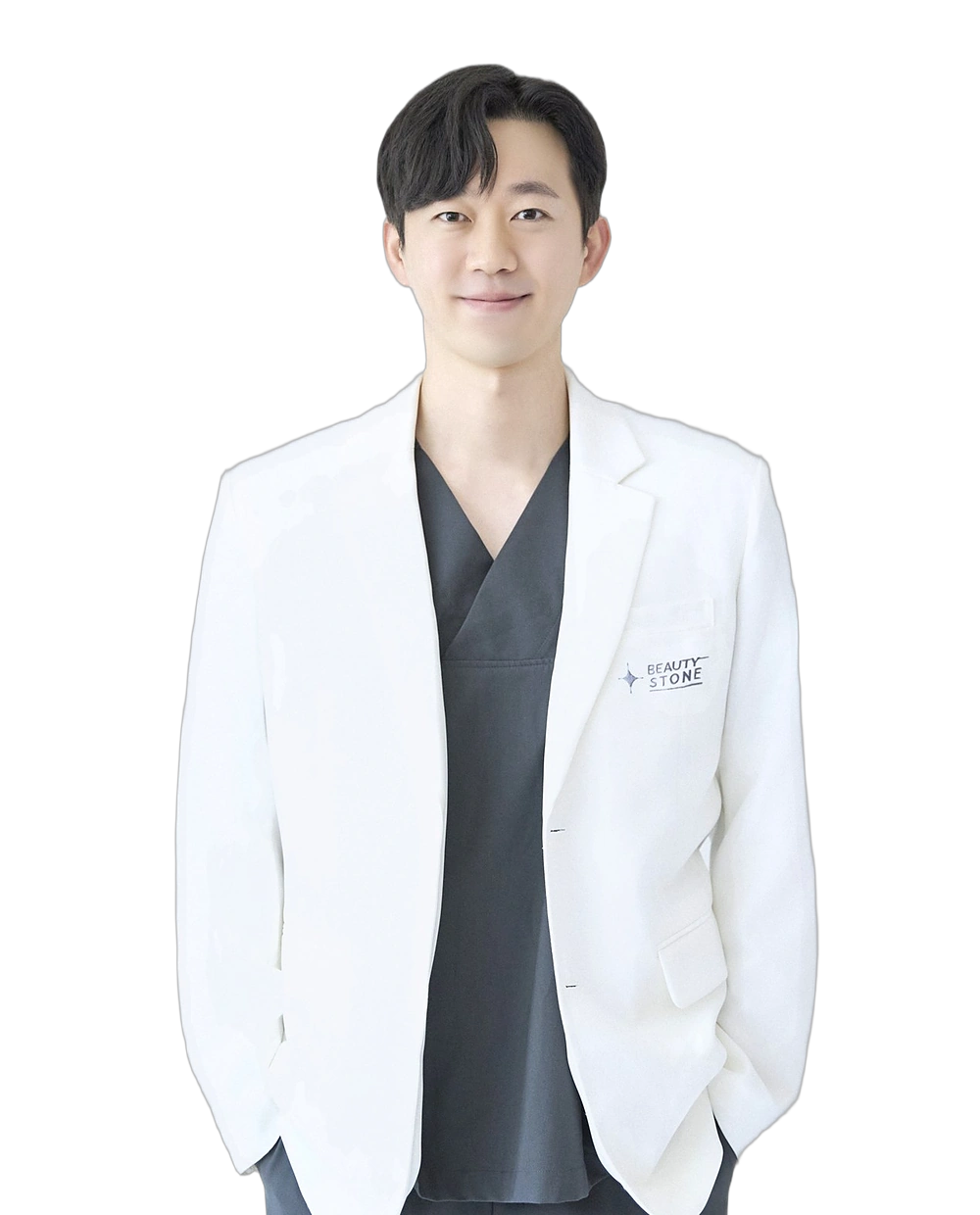
Kim Simon Jang-ju Head Physician
JANGJU KIM
Head Physician Kim Simon Jang-ju practices at STON Clinic, LOTTE HOTEL in Myeongdong (from December 1, 2026).
Career / Education
- Current) Head Physician (practicing at STON Clinic Myeongdong and Beautystone Clinic Hapjeong; Myeongdong from Dec 1, 2026)
- Graduated from Kyung Hee University College of Medicine
Comments