


Key takeaways
- Prescription numbing cream needs about 1 hour to numb the skin well, and it peaks around 2 to 3 hours after you apply it.
- Pain by area: Skin type, the body area, and the device and its settings all shape how much a session hurts.
- In an underarm study, ice packs eased pain about as much as numbing cream did.
- Large areas: Spreading numbing cream over your legs and wrapping it in plastic raises the risk of serious side effects.
Laser hair removal stings, but most people describe it as warm pinpricks or a rubber band snapping against the skin. If you use a prescription numbing cream, it needs about an hour to work well. How much it hurts also depends on the area, your hair, your skin type, and how the laser is set.
Does Laser Hair Removal Hurt? What It Actually Feels Like
Does Laser Hair Removal Hurt? What It Actually Feels Like
Yes, a little. Many patients say each pulse feels like a warm pinprick or a rubber band being snapped against the skin. Afterward, the treated area often feels hot for a while and looks like a mild sunburn.
That said, "how much" varies a lot from person to person. A survey of 383 women at dermatology clinics found laser hair removal scored higher for pain than the other cosmetic procedures they'd had, with average scores between 4.3 and 4.8 out of 10. On average, that's a moderate level of pain, not an unbearable one.
Keep in mind that a single number can't tell you how your own session will feel. Your hair, your skin, and the device all change the answer, which is why the rest of this article looks at each one.
How Long Before Laser Hair Removal Should You Apply Numbing Cream?
How Long Before Laser Hair Removal Should You Apply Numbing Cream?
Plan on about an hour. Under a dressing, a prescription lidocaine and prilocaine cream gives satisfactory numbing about 1 hour after you apply it. The effect peaks around 2 to 3 hours and lasts another 1 to 2 hours after the cream is wiped off.
Putting it on 10 minutes before you walk in usually won't do much. Some studies have used a shorter window. In one, 64 patients had two different numbing creams applied 30 minutes before treatment without a dressing, and the two creams didn't differ in pain control. That study compared creams with each other, though, not cream against no cream.
How Long Before Laser Hair Removal Should You Apply Numbing Cream?
How early to apply it, how much to use, and whether to cover it are decisions for the clinic treating you, based on the area and the product. If you're asked to apply cream at home before your visit, write down the exact area, amount, and time, and stick to them.
Why Does Laser Hair Removal Hurt More in Some Areas?
Why Does Laser Hair Removal Hurt More in Some Areas?
Areas with thick, dark, densely packed hair have more hair roots soaking up laser energy. The laser is absorbed by the dark pigment (melanin) in each hair root and turns into heat, which is how it damages the follicle. More pigment packed into one spot means more heat in that spot.
Pain isn't set by body area alone, though. Skin type, the treatment area, the type of device, and its settings all play a part. When devices are compared, the 1064 nm Nd:YAG laser tends to score higher for pain, while diode lasers tend to score lower.
Why Does Laser Hair Removal Hurt More in Some Areas?
You might expect your armpits to be the worst. In fact, the ranking of areas isn't consistent. In a 53-person study using a laser that fires 755 nm and 1064 nm together, the chest and abdomen hurt more on average, while the neck and armpits hurt less. Those numbers come from one device and one cooling setup, so they won't map neatly onto every clinic's laser.
| What tends to raise pain | Why | What you can do beforehand |
|---|---|---|
| Thick, dark, dense hair | More roots absorb the heat | Shave 1 to 2 days before |
| Tanned skin | Skin pigment also absorbs the laser | Avoid tanning for 6 weeks |
| Wavelength and settings | 1064 nm scored higher for pain | Ask about wavelength and cooling |
| A small, very sensitive area | Numbing helps most here | Discuss numbing in advance |
Ice vs. Numbing Cream: What Else Helps With the Pain?
Ice vs. Numbing Cream: What Else Helps With the Pain?
Cooling works better than you might think. In a trial where people had ice packs on one armpit and numbing cream on the other across three sessions, the overall pain relief was about the same. Ice felt better right after the laser, while the cream side felt better 5 minutes later. Everyone in that trial had lighter skin and coarse, dark underarm hair, so results may differ for other skin types.
A review that pooled studies on non-injected pain relief for laser procedures found numbing creams looked somewhat better than cooling. However, the studies were small and at risk of bias, so the authors said the evidence wasn't strong enough to recommend one method over another.
Here's what you can control on your side:
- Shave 1 to 2 days before your session so there's little hair above the skin.
- Avoid sun tanning, tanning beds, and self-tanner for at least 6 weeks beforehand.
- Expect the skin surface to be cooled with cold air or gel during treatment.
- If it burns afterward, use a cool compress wrapped in a towel for a few minutes at a time.
Is It Safe to Put Numbing Cream on Large Areas?
Is It Safe to Put Numbing Cream on Large Areas?
Not without a doctor's plan. The wider the area and the longer the cream stays on, the more of the drug your body absorbs. The risk climbs when cream goes on large areas, stays on for a long time, is applied to irritated or broken skin, or is covered with plastic wrap. In those situations it can cause irregular heartbeat, seizures, and breathing difficulties*. Over-the-counter products with more than 4% lidocaine shouldn't be used before, during, or after laser hair removal.
Based on a 2024 US FDA warning.
That matters most on days you're treating something big, like your full legs. Here's how to tell a normal reaction from one that needs attention.
- Usually passes: Pale or slightly red, puffy skin where the cream sat tends to settle within 1 to 2 hours.
- Get medical care right away: Skin or lips that look pale, gray, or bluish.
- Wipe the cream off and get help: Headache, a racing heart, shortness of breath, or lightheadedness.
- Go to the nearest emergency room: A seizure or confusion.
Planning Around a Seoul Trip
Unless you've had IV sedation that day, there's no reason to push back a flight because of a laser hair removal session.
One visit isn't the whole plan. Laser hair removal works as a series, and hair thins out gradually rather than all at once. If you're timing sessions around trips to Seoul, the numbing and cooling tips above apply to each visit.
After you get home, you can message the clinic with photos if something looks off. If you notice blisters, spreading redness, or pain that keeps getting worse, see a local doctor first rather than waiting for a reply.
What Should You Ask Before Your First Session?
Ask two things together: which wavelength will be used on your area, and if numbing cream is part of the plan, how many minutes ahead it goes on and how far it should spread. After your first session, note which spots hurt most. That note makes it easier to decide whether to adjust the settings or your prep next time.
STON Clinic is in Seoul's Myeongdong area, inside Lotte Hotel Seoul near Euljiro 1-ga Station. When you reach out, include the area you want treated, any past hair removal you've had, and your preferred dates.
If this raised a question about your own skin
Quick bookingReferences
- What laser hair removal feels like, numbing, and cool compresses — American Academy of Dermatology — American Academy of Dermatology
- Risks of topical pain relief products used around cosmetic procedures — US FDA, 2024 — U.S. Food and Drug Administration
- Lidocaine and prilocaine cream label, including onset and duration — DailyMed, US National Library of Medicine
- Lidocaine and prilocaine cream side effects and precautions — MedlinePlus
- Ice packs vs. numbing cream for underarm laser hair removal — J Am Acad Dermatol, 2023 — PubMed Central
- Two numbing creams compared before 1064 nm laser hair removal — Dermatol Surg, 2005 — PubMed Central
- Pain by body area with a blended 755/1064 nm laser — Lasers Surg Med, 2026 — PubMed Central
- Review of side effects and pain with light-based hair removal — J Cutan Med Surg, 2023 — PubMed Central
- Preparation, tanning, and cooling for laser hair reduction — Leeds Teaching Hospitals NHS Trust
Frequently asked questions
Q. Will numbing cream make laser hair removal completely painless?
A. No, numbing cream reduces laser hair removal pain rather than removing it. In an underarm trial, numbing cream eased pain about as much as an ice pack did. Expect some stinging to remain, and tell the person treating you if it becomes hard to tolerate.
Q. Can I put numbing cream on my legs at home and wrap them in plastic?
A. It's safer not to. Covering large areas like your legs with numbing cream and plastic wrap increases how much your body absorbs, and serious reactions such as irregular heartbeat and seizures have been reported. Follow the clinic's instructions on where and how much to apply.
Q. Does laser hair removal hurt more during your period?
A. It may feel a bit different. In a survey of 383 women, average laser hair removal pain was 4.3 to 4.8 out of 10 across cycle phases, and women with stronger premenstrual symptoms reported more pain. Because it was a survey, mention it at your consultation if your symptoms tend to be strong.
Q. Why does beard or chest laser hair removal feel more painful for men?
A. Beards and chests usually have thick, dark, dense hair, so more roots absorb heat in each pulse. In a study of 64 people treated with a 1064 nm laser, women's pain scores were lower than men's. Before your first session, talk through cooling and whether numbing cream makes sense.
Q. Can I ice the area right after numbing cream?
A. Go easy. Until normal feeling returns, avoid scratching or rubbing the area and keep it away from extreme heat or cold. After treatment, use a cool compress wrapped in a towel for a few minutes at a time instead of holding bare ice on numb skin.
Q. How long does redness and burning last after laser hair removal?
A. Usually a few hours. In a 53-person study, redness faded after about 4 hours on average and swelling within an hour. A mild-sunburn look is common, but if blisters appear, contact the clinic right away.
Q. Can I get laser hair removal on tanned skin?
A. It's better to wait. A UK hospital leaflet asks patients to avoid natural tanning, tanning beds, and fake tan for at least 6 weeks before treatment and notes it can't treat tanned skin. If you have a beach trip coming up, schedule your session after it.
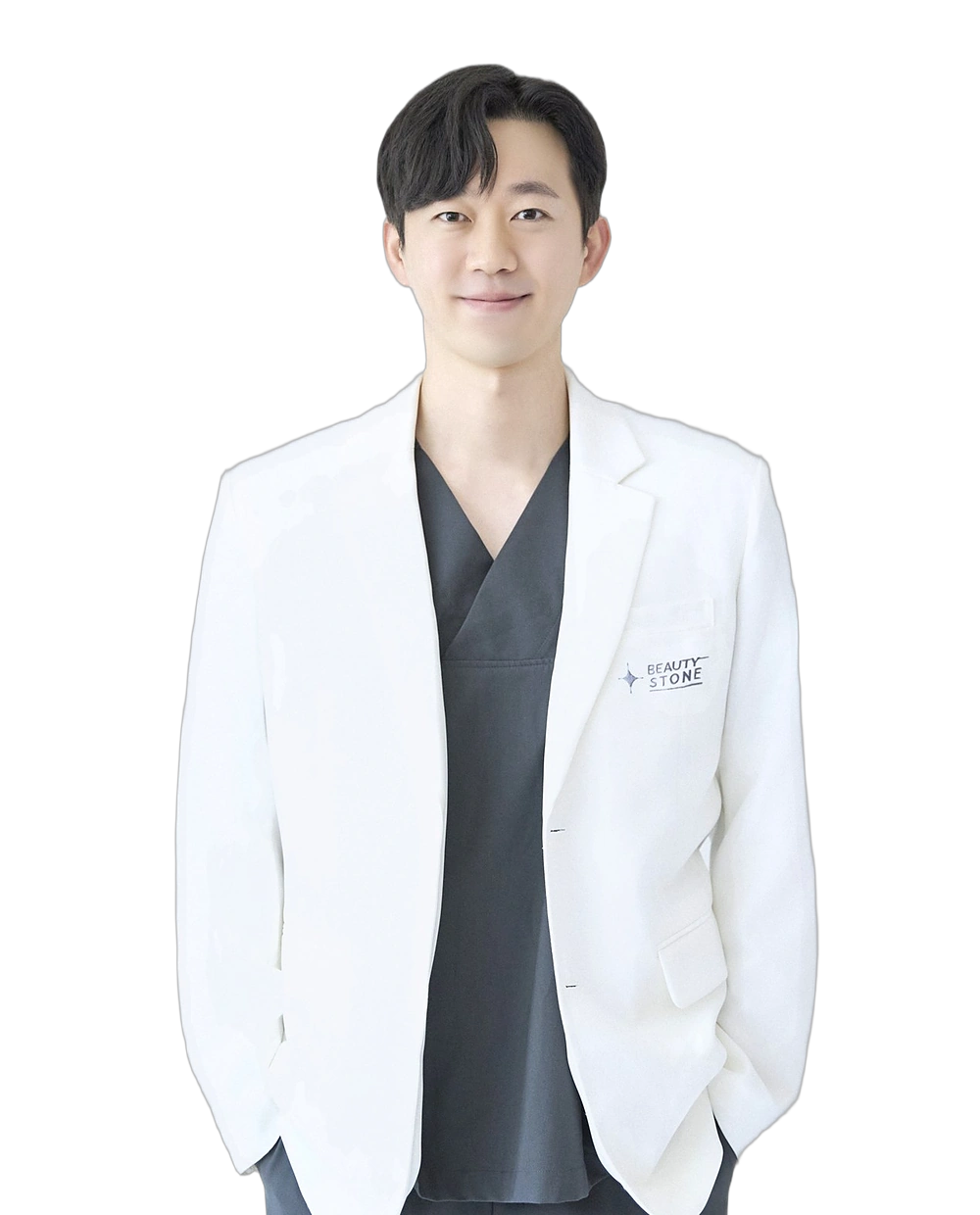
Kim Simon Jang-ju Head Physician
JANGJU KIM
Head Physician Kim Simon Jang-ju practices at STON Clinic, LOTTE HOTEL in Myeongdong (from December 1, 2026).
Career / Education
- Current) Head Physician (practicing at STON Clinic Myeongdong and Beautystone Clinic Hapjeong; Myeongdong from Dec 1, 2026)
- Graduated from Kyung Hee University College of Medicine
Comments