


Key takeaways
- For a double chin alone, one study used 35,000 to 45,000 J per session, and an expert board suggests 50,000 to 70,000 J.
- Comparing quotes: Look for the joule total, the areas, the handpiece, and the number of sessions on the same page.
- Adding the cheeks and jawline splits the same total, so the under-chin area gets a smaller share.
- Sessions: Studies used 2 sessions 30 days apart or 6 sessions 2 weeks apart, and judged results 12 weeks after the last one.
In the one study that treated only the double chin with Onda, each session delivered 35,000 to 45,000 joules (J). An international Onda advisory board suggests 50,000 to 70,000 J for the same under-chin area. That's why two Onda lifting quotes with the same joule total can mean different treatments: one may put everything under the chin, while the other spreads it across the cheeks and jawline too.
What Does the Joule Number on an Onda Quote Mean?
What Does the Joule Number on an Onda Quote Mean?
The joule figure is the total microwave energy delivered under your skin in one session. It's simply power multiplied by time, so 70 watts running for 10 minutes adds up to 42,000 J. Onda uses 2.45 GHz microwaves, which is a different kind of energy from radiofrequency (RF) devices.
Joule (J): A unit of energy. One watt delivered for one second equals one joule.
The same total can be reached two ways: higher power for a shorter time, or lower power for longer. The advisory board prefers the slower route, heating the area evenly over time. Higher power is harder to control and may bring more side effects. During treatment, the skin surface shouldn't go above 40 to 41°C.
| What the quote says | What it actually means | What to ask |
|---|---|---|
| A joule total (for example, "60,000 J") | Energy delivered in one session | Is that per session or for the whole course? |
| Double chin, cheeks, jawline | Where the energy gets divided | How many joules go to each area? |
| Shallow or deep handpiece | Where the heat focuses (about 0.7 cm or 1.2 cm deep) | Is it heating the dermis or the fat layer? |
| Number of sessions | How many visits, and how far apart | When is the next session, and when are results checked? |
How Many Joules Go Into a Double Chin Session?
How Many Joules Go Into a Double Chin Session?
In a small Italian study, 10 women with moderate to severe sagging under the chin had 2 sessions, 30 days apart. Each session ran about 10 minutes at 70 to 90 watts and delivered 35,000 to 45,000 J. Twelve weeks after the last session, their average laxity score fell from 3.6 to 2.3 on a 4-point scale. With only 10 people and no comparison group, it's a reference point, not a promise. Individual results vary.
The advisory board's suggestion for the under-chin area is 60 to 90 watts and 50,000 to 70,000 J. The treated zone starts 1.5 cm below the lower edge of the jawbone and runs down to the hyoid bone. The strip right under the jawbone is skipped because a nerve that moves the lower lip runs there, along with blood vessels.
Hyoid bone: The small U-shaped bone you can feel at the front of your neck, just under the chin.
How Many Joules Go Into a Double Chin Session?
What Happens to the Dose When You Add Cheeks and Jawline?
What Happens to the Dose When You Add Cheeks and Jawline?
Every area you add takes a share of the same total. So if two quotes both say the same number of joules, one double chin and one full lower face aren't the same dose per area. When the treated patch is smaller than about 15 × 15 cm, the joules or power should be lowered in proportion*.
Based on the Onda Coolwaves international advisory board recommendations.
Facial fat sits in separate pockets. In a Korean study of facial treatment, doctors mapped those fat pockets first, then used one handpiece for the fat layer and another for the dermis*. If the goal is reducing fat, the spot needs at least 1 cm of fat under the skin. Where there's very little fat, the settings go lower and the focus shifts to firmness.
Based on a 2026 Korean study of microwave treatment for the face.
Before treatment at STON Clinic, a diagnostic ultrasound scan measures the skin layers and fat thickness under your chin and on your cheeks, and you get the measurements as a report. It's also standard not to pass over the same spot twice in one session, which matters when the total is being split.
What Happens to the Dose When You Add Cheeks and Jawline?
How Many Onda Sessions, and How Far Apart?
How Many Onda Sessions, and How Far Apart?
There isn't one fixed course. That's why it's worth checking whether a quoted joule number covers one session or the whole plan. A second study of 48 people treated fat and sagging under the chin with 6 sessions, 2 weeks apart, about 10 minutes each. Twelve weeks after the last session, the average fat score dropped from 3.4 to 1.7 and the laxity score from 3.7 to 2.4.
| Study | Area | Sessions | When results were checked |
|---|---|---|---|
| 10 women | Under-chin sagging | 2 sessions, 30 days apart | 12 weeks after the last session |
| 48 people | Under-chin fat and sagging | 6 sessions, 2 weeks apart | 12 weeks after the last session |
Neither study judged the result right after one visit. Both waited about 12 weeks after the course ended. The same area shouldn't be treated again within 15 days, and if a firm lump forms under the skin, the next session waits until it's gone.
Onda Side Effects: What Fades and What Needs a Call
Onda Side Effects: What Fades and What Needs a Call
Redness, warmth, swelling, tenderness, and mild numbness are common and usually settle within a few days. The handpiece cools the skin surface to about 5°C as it moves. If the area stays pink, skip hot water until it calms down, and avoid direct sun for two days.
Contact the clinic right away if you notice any of these:
- A blister, or a spot that stings like a burn
- A firm lump you can feel under the skin
- Redness and heat that haven't eased after a few days
- Fever, headache, or heavy tiredness after the session
It's better to postpone Onda if any of these apply:
- You're pregnant, or breastfeeding within 10 months of giving birth
- You have a pacemaker or another implanted heart device
- You're being treated for cancer, or had cancer within the last 5 years
- There's a wound, rash, or infection where you'd be treated
- The skin in that area doesn't sense heat well
Fitting Onda Into a Seoul Trip
Unless you've had IV sedation that day, there's no reason to delay your flight because of Onda. Plan the rest of your trip around the fact that redness can take a few days to settle.
One visit won't change your face overnight. Most changes come on gradually, and the studies above needed 2 to 6 sessions before judging the result. If you can only fit one session into this trip, think of it as the start of a plan rather than the whole course.
After you get home, you can message the clinic with photos if you have questions. If you notice a blister, spreading redness, or a growing lump, see a local doctor first rather than waiting for a reply.
What Should You Ask Before Booking Onda?
If your concern is only the double chin, compare the joules per session and the number of sessions. If it's the cheeks and jawline too, ask how the total is split between areas. Very loose skin may not improve much with Onda, so that's worth raising at your consultation too.
A good opening question is: "How many joules would you put under my chin in one session?" STON Clinic is in Seoul's Myeongdong area, on the 9th floor of the Main Tower at Lotte Hotel Seoul near Euljiro 1-ga Station. When you reach out, include the area that bothers you most and your travel dates. If you've had Botox or filler in that area recently, mention when.
If this raised a question about your own skin
Quick bookingReferences
- Two Onda sessions for sagging under the chin — Lasers Med Sci, 2025 — PubMed Central
- Onda international advisory board recommendations on settings and who should wait — Bioengineering, 2024 — PubMed Central
- Six microwave sessions for fat and sagging under the chin — J Cosmet Dermatol, 2022 — PubMed Central
- Korean study comparing facial microwave treatment with HIFU — Aesthet Surg J, 2026 — PubMed Central
Frequently asked questions
Q. Is Onda painful?
A. Onda usually feels like warmth with a mild tingling. In a Korean study of facial treatment, the average pain score was 2.3, compared with 4.7 for high-intensity focused ultrasound (HIFU). The handpiece cools the skin as it moves, and the power is adjusted to how much discomfort you feel.
Q. Do more joules mean better Onda results?
A. More joules don't automatically mean better Onda results. Pushing the power up to reach a big number fast makes the heat harder to control and may add side effects. Areas with little fat actually call for lower settings.
Q. Can I compare Onda joules with Ultherapy shots?
A. No, Onda joules and Ultherapy or HIFU shots measure different things, so the numbers can't be compared directly. In a Korean study, Onda improved faster at 1 month, while HIFU pulled ahead on lift and elasticity at 3 months. Choose by your concern and your timeline.
Q. Is Onda permanent?
A. Onda isn't considered permanent, and there isn't solid long-term data yet. The double chin studies judged results 12 weeks after the last session, and the advisory board notes that longer follow-up is still needed. Results differ from person to person.
Q. Can I get Onda where I've had Botox or filler?
A. Onda over a recently injected area may weaken the injection's effect. That's why some doctors wait about 6 months after Botox, and about 3 to more than 12 months after filler, depending on how fast it breaks down. Tell the clinic what you had and when.
Q. Should I skip moisturizer before Onda?
A. Yes, skip moisturizing creams and gels on the treatment area from the day before. Microwaves are absorbed by water, so extra moisture on the surface can keep the heat near the skin instead of reaching the fat layer.
Q. Does Onda work on cheeks with very little fat?
A. Onda isn't a good fit for reducing fat in cheeks that are already thin. Fat reduction needs at least 1 cm of fat under the skin. Thinner areas are treated at lower settings for firmness only, and removing too much fat can reveal loose skin that wasn't visible before.
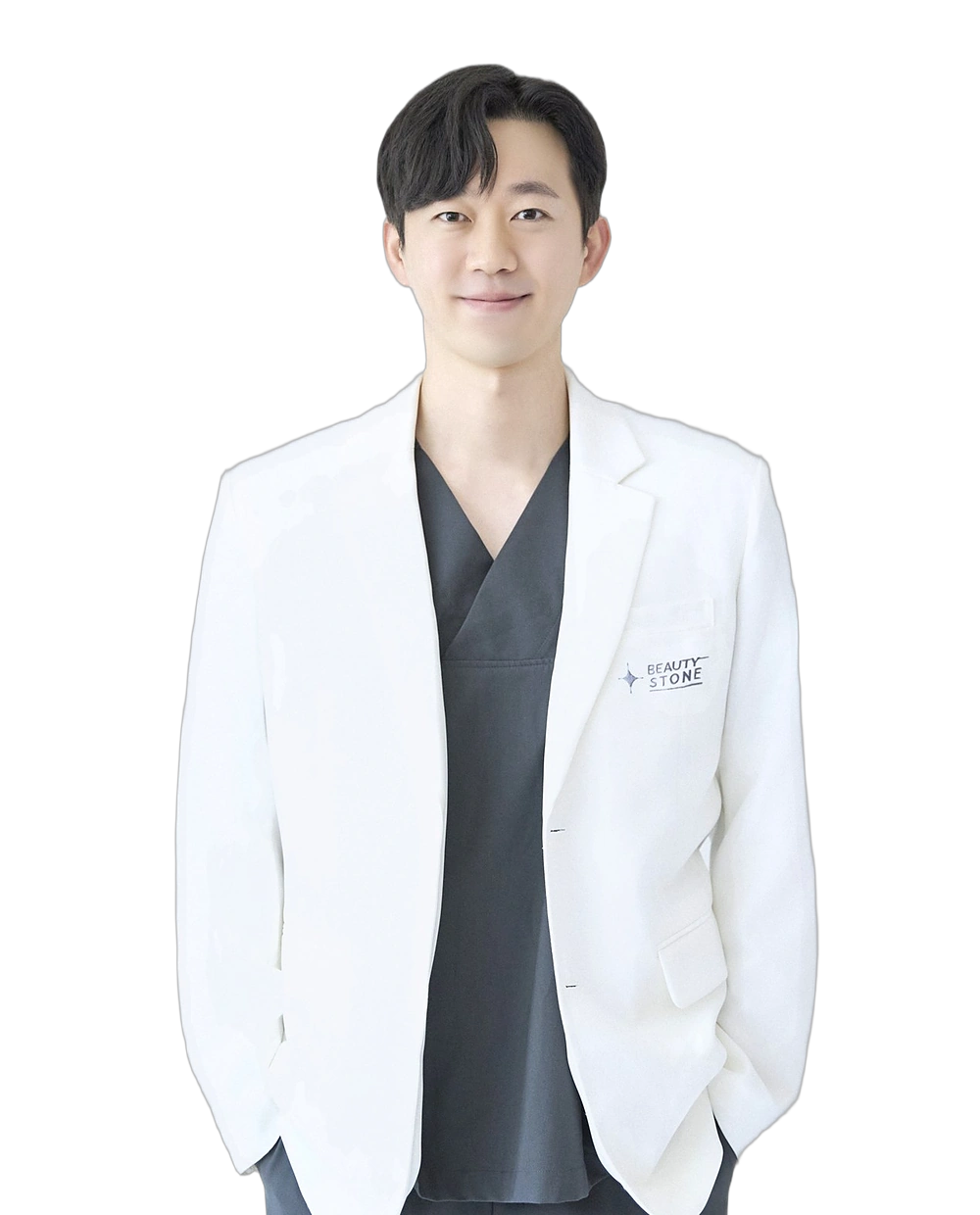
Kim Simon Jang-ju Head Physician
JANGJU KIM
Head Physician Kim Simon Jang-ju practices at STON Clinic, LOTTE HOTEL in Myeongdong (from December 1, 2026).
Career / Education
- Current) Head Physician (practicing at STON Clinic Myeongdong and Beautystone Clinic Hapjeong; Myeongdong from Dec 1, 2026)
- Graduated from Kyung Hee University College of Medicine
Comments