


Key takeaways
- Sagging jawline or cheeks points to Ultherapy; thin skin with fine lines points to Thermage.
- Depth: Ultherapy heats points up to about 5 mm deep, down to the SMAS; Thermage heats the dermis evenly.
- Ultherapy changes show up over 2 to 6 months, while Thermage results look best at about 6 months.
- First step: figure out whether the sag sits in the deeper layers or the skin itself has thinned.
If your jawline or cheeks have started to slide downward, Ultherapy is usually the one to look at first. If your skin has thinned and fine lines or rough texture bother you more than sagging, Thermage is the better starting point. The two use different energy and heat different depths, which is why they solve different problems even though both get called "lifting."
Ultherapy vs. Thermage: How Deep Does the Heat Go?
Ultherapy vs. Thermage: How Deep Does the Heat Go?
Ultherapy focuses ultrasound energy into tiny points beneath the skin. Each point is smaller than 1 cubic millimeter, and the skin surface above it stays untouched. The points can reach up to about 5 mm deep, into the lower dermis, the SMAS, and the thin neck muscle called the platysma*. Collagen in those layers contracts with the heat and then rebuilds, which is what lifts tissue that has drooped.
SMAS (superficial musculoaponeurotic system): a thin sheet under the fat that covers your facial muscles. It's the layer surgeons tighten in a facelift.
Thermage uses monopolar radiofrequency (RF). Instead of separate points, it warms the dermis as an even layer, tightening the skin itself and softening fine lines. Radiofrequency devices tend to give modest tightening because they stay in the dermis. Focused ultrasound was developed to send heat deeper, into the connective tissue below the skin.
That difference in depth is the whole story. Sagging that comes from the deeper layers responds to deeper heat, while loose, thin skin responds to heat in the dermis.
Ultherapy vs. Thermage: How Deep Does the Heat Go?
Sagging Jawline or Thin, Crepey Skin: Which Comes First?
Sagging Jawline or Thin, Crepey Skin: Which Comes First?
A jawline that has lost its edge, or cheeks that have dropped, is a reason to look at Ultherapy first. When the skin has thinned and fine lines catch your eye before any sagging does, Thermage is the closer match. Your age matters less than which of these you notice first in the mirror.
At the exam, the two problems are separated by hand. A gentle pinch of the skin shows how much it has lost its snap, and lifting the cheek tissue just below the cheekbone shows how far it has dropped. Areas where volume has hollowed out are checked by eye as well.
| What you're choosing by | Ultherapy | Thermage |
|---|---|---|
| Energy | Focused ultrasound | Monopolar radiofrequency |
| Layer it heats | Lower dermis to SMAS (up to about 5 mm) | Dermis |
| Concern it fits first | Sagging jawline and cheeks | Thin skin, fine lines, texture |
| When results show | Gradually over 2 to 6 months | A little right away, best at about 6 months |
| Common short-term reactions | Brief redness and swelling, occasional bruising | Brief redness and swelling |
Decide whether you want to lift tissue that has dropped or tighten the skin's surface. Once that's clear, the choice between the two usually follows.
How Long Until You See Results?
How Long Until You See Results?
With Ultherapy, most people see modest lifting and tightening appear gradually over 2 to 6 months after a single session. Thermage often brings a little tightening right away, but because new collagen takes time, results look best at about 6 months*. Individual results vary, and some people benefit from more than one session.
Based on American Academy of Dermatology patient guidance
In a study of 35 people who had one focused ultrasound treatment of the face and neck, eyebrow height rose by an average of 1.7 mm at 90 days (about 3 months). That's a change you notice when you compare photos side by side, so it's fair not to expect your face to look different overnight.
For Thermage, 86 people treated once around the eyes with an early-generation device were followed for 6 months. In blinded photo scoring, 83.2% of treated eye areas improved by at least one wrinkle grade.
Keep in mind that the treating doctors, looking without before photos, saw improvement in only 28.9% of areas. About half of the participants said they were satisfied.
How Long Until You See Results?
These two studies looked at different areas and different device generations, so their numbers can't be lined up directly. Follow-up also stopped at 90 days and 6 months, which means there's limited evidence for claims that results last several years.
Pain, Downtime, and Signs That Need a Call
Pain, Downtime, and Signs That Need a Call
Neither treatment breaks the skin, so short-lived redness and swelling are the usual signs you've had one, and most people need little or no downtime. With Ultherapy, brief discomfort is common as the heat reaches the deeper layers, and transient redness, swelling, and occasional bruising have been reported*. Thermage also works with heat, so you'll feel warmth during the treatment.
Based on a 2015 review of focused ultrasound skin tightening
Burns that cause blisters are rarely reported. In the 86-person Thermage study, second-degree burns occurred with 21 of 5,858 radiofrequency pulses (0.36%). At 6 months, 3 people had small areas of scarring. Contact the clinic where you were treated right away if you notice any of these:
- A blister or oozing at a treated spot
- Skin that peels or crusts over
- Redness that doesn't settle after a few days and keeps getting more painful
Either treatment is usually postponed in these situations:
- You're pregnant
- You have a skin infection in the treatment area
- You take a medication that may affect treatment
Tell your provider about every medicine you take before treatment, whatever it is.
Why Measure Your Skin Layers With Ultrasound First?
Why Measure Your Skin Layers With Ultrasound First?
Skin, fat, and SMAS thickness vary from one spot to the next, even on the same face, so the depth where heat lands is the variable that shapes the result. The Ultherapy device can show tissue layers on screen down to 8 mm, letting the provider see where the energy will go. Transducers with different focal depths adjust depth and energy to each person.
Focused ultrasound is best suited to mild to moderate laxity. For older patients with severe sagging and strong vertical neck bands, surgery should be considered alongside it.
Before treatment, diagnostic ultrasound is used to measure the layers and their thickness along your jawline and cheeks, and the measurements are recorded. Seeing which spots are thin and which have dropped makes it easier to decide between pulling up deeper tissue with Ultherapy and tightening the dermis with Thermage.
Planning Ultherapy or Thermage Around a Trip to Seoul
Unless you've had sedation that day, flying home isn't a reason to delay either treatment. Since both leave only brief redness and swelling in most people, the bigger question is when you'll judge the result, and that's after you're back home.
Neither treatment remakes your face in one visit. Most people look a little closer to how they used to rather than suddenly different, and how much you see depends on your skin.
Once you're home, you can send photos and questions to the clinic on WhatsApp. If you have a blister, oozing, or redness that keeps spreading, see a local doctor first rather than waiting for a reply.
Choosing Between Ultherapy and Thermage at Your Consultation
Whether the sag lives in the SMAS or the dermis has thinned is what decides between these two. A useful first question is: "Is my jawline sagging coming from the deeper layer or from the skin itself?" That one answer makes the two options easy to compare.
STON Clinic is in Myeongdong, on the 9th floor of Lotte Hotel Seoul's Main Tower near Euljiro 1-ga Station, and consultations are available in English. You can send just that one question on WhatsApp before your visit.
If this raised a question about your own skin
Quick bookingReferences
- Results timing and recovery for skin-tightening treatments — American Academy of Dermatology — American Academy of Dermatology
- How deep focused ultrasound reaches and who it suits — Clin Cosmet Investig Dermatol, 2015 — PubMed Central
- Study of 35 people after one focused ultrasound treatment — J Am Acad Dermatol, 2010 — PubMed Central
- Study of 86 people after one radiofrequency (early Thermage) treatment around the eyes — Lasers Surg Med, 2003 — PubMed Central
- How deep radiofrequency and focused ultrasound deliver heat — Semin Cutan Med Surg, 2013 — PubMed Central
Frequently asked questions
Q. Which lasts longer, Ultherapy or Thermage?
A. No head-to-head data comparing how long Ultherapy and Thermage last in the same people turned up in the sources for this article. Thermage results can last 2 to 3 years with good skin care, while Ultherapy guidance doesn't give a duration and notes that extra sessions may add benefit. Comparing photos taken in the same light about 6 months later is a practical way to decide on a next session.
Q. I have sagging cheeks and thin skin with fine lines. How do I choose?
A. When sagging cheeks and thin, finely lined skin show up together, the plan may include both Ultherapy and Thermage rather than just one. The interval is often set somewhere between 6 months and 1 year, but that's not a fixed rule for everyone. To use fewer shots, treatment can be concentrated on the areas that have dropped most.
Q. My cheeks are already thin. Is Ultherapy still an option?
A. If your cheeks are thin, the first thing to check is whether the Ultherapy plan steers around hollow areas. Because it places heat deep, spots with little fat and spots that have dropped are mapped separately. If your cheeks look shadowed because they've hollowed rather than sagged, adding volume may come before any lifting.
Q. My sagging is fairly advanced. Will Ultherapy or Thermage be enough?
A. With advanced sagging, other options, including surgery, are worth weighing alongside Ultherapy or Thermage. Non-surgical tightening needs less downtime, but it can't match the change a facelift or neck lift gives. Checking how far the sagging has progressed with photos and ultrasound first is the safer way to choose.
Q. How do Shurink and InMode fit into this comparison?
A. Shurink and InMode can be sorted by energy type, the same way. Shurink focuses ultrasound like Ultherapy, and InMode uses radiofrequency, so the question is still whether deeper sagging or surface laxity bothers you more. Depth and handpieces differ by device, though, so the results aren't interchangeable.
Q. Does Ultherapy or Thermage hurt more?
A. Discomfort during Ultherapy is common but brief, felt as the heat reaches the deeper layers. Thermage is felt as warmth while radiofrequency heats the dermis. How strong it feels varies by area and by person, so tell the provider during treatment if it's too much and the energy can be adjusted.
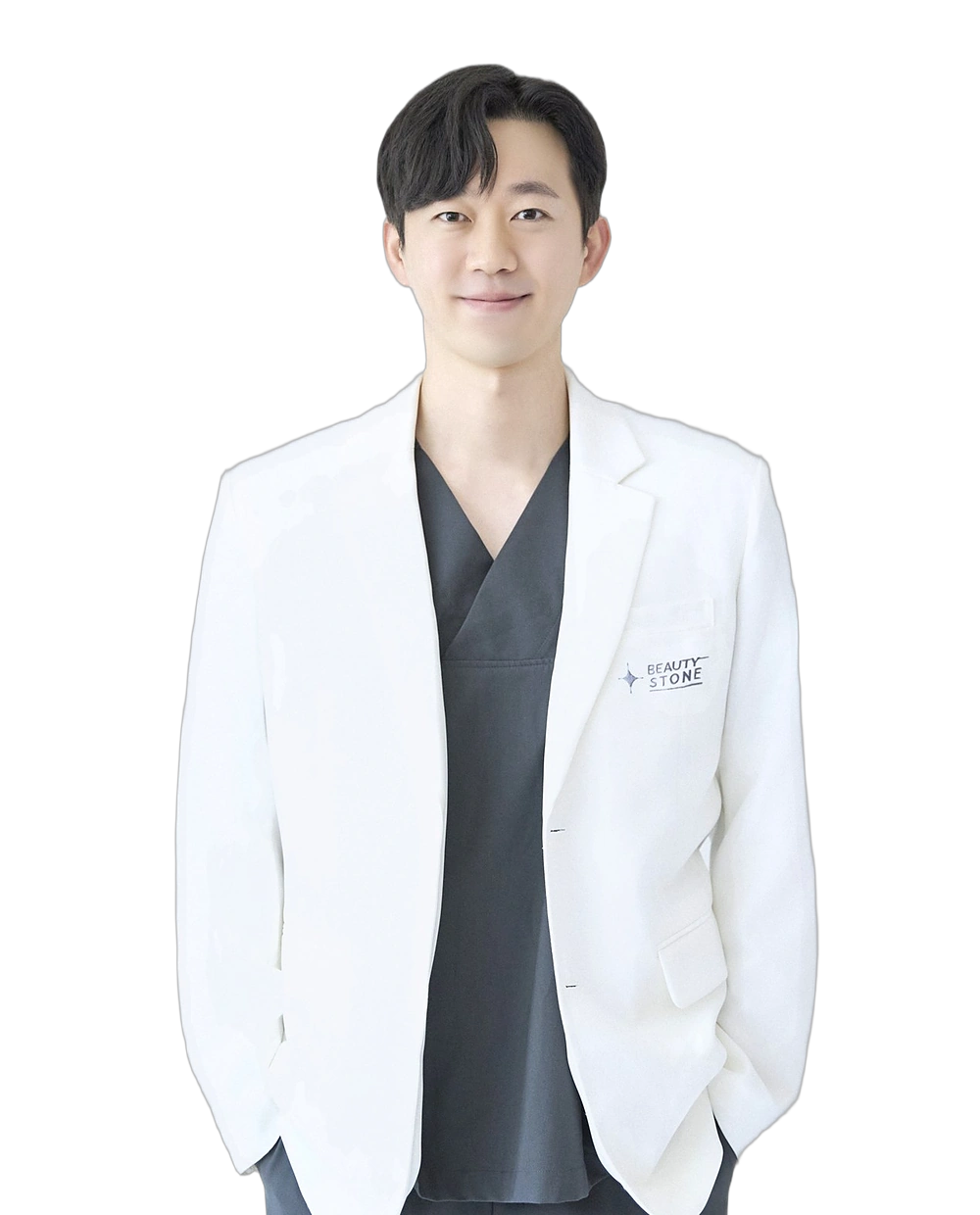
Kim Simon Jang-ju Head Physician
JANGJU KIM
Head Physician Kim Simon Jang-ju practices at STON Clinic, LOTTE HOTEL in Myeongdong (from December 1, 2026).
Career / Education
- Current) Head Physician (practicing at STON Clinic Myeongdong and Beautystone Clinic Hapjeong; Myeongdong from Dec 1, 2026)
- Graduated from Kyung Hee University College of Medicine
Comments