
STON Myeongdong · Laser
Decided to remove it?
Tattoo removal
A laser breaks the pigment into small pieces and the body carries it out, repeated over sessions. We start by checking what kind of tattoo it is.
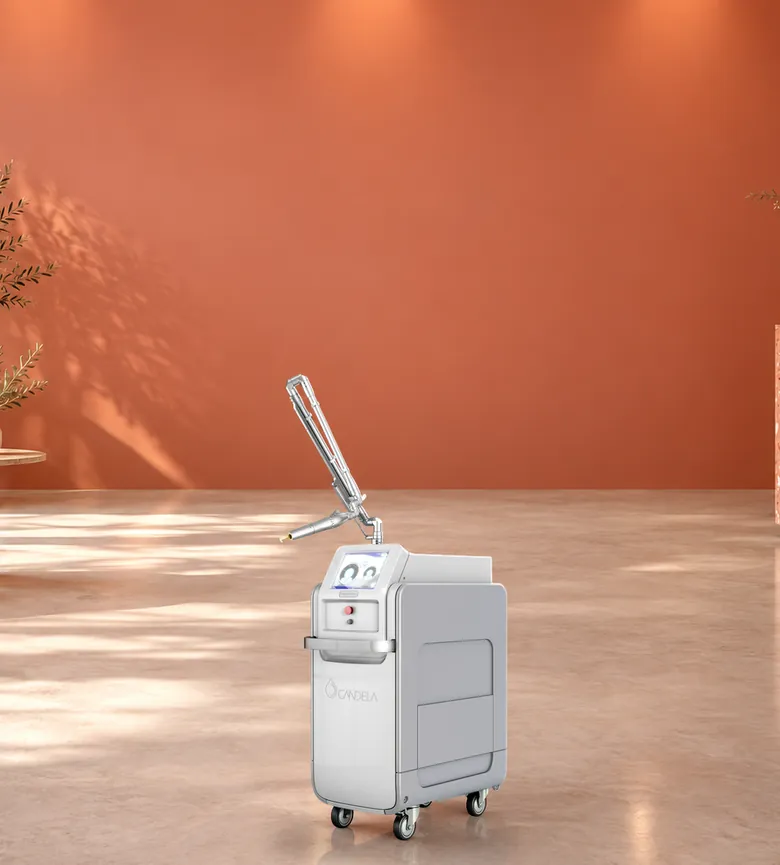
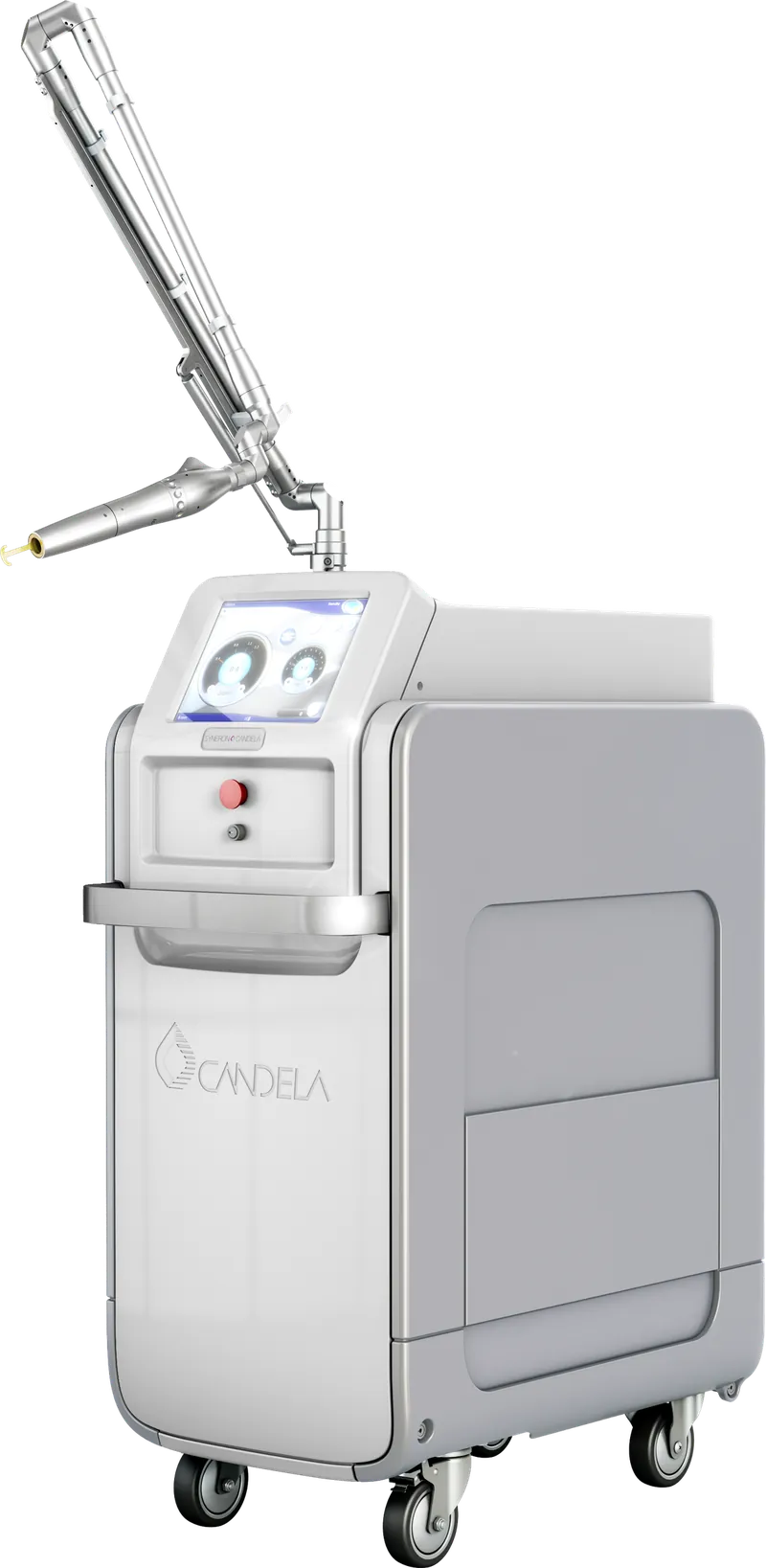
Book a consultationTattoo removal repeats a process in which a laser breaks pigment settled in the dermis into small pieces and immune cells carry it out. The laser fires in picosecond pulses and carries three wavelengths: 532nm, 730/785nm and 1064nm. Which one is used follows from color and depth and is decided at your visit.
A different wavelength for each color
Each color answers to a different wavelength. 532nm goes to reds and yellows, 730/785nm to the stubborn greens and blues, and 1064nm to black and to dark pigment sitting deep.
Source: Candela · PicoWay
The state is checked with an assessment scale
At the examination we use the Kirby-Desai tattoo assessment scale, which scores six items: color, ink load, whether there is layering, scarring or tissue change, location, and skin type. That score is revisited as things progress.
Prepare your questions
One photo of the tattoo and whatever you remember is enough to start.
The color and extent of the tattoo
Whether it is black alone or mixed colors, and roughly the size and where it sits.
When and how it was done
When, and by what method. Also any layering or cover-up.
Earlier removal attempts
If you had laser elsewhere, how your skin was then.
A tendency to scar
If a wound has ever healed wider or higher, please tell us.
Medications you take
If you take anything that can make you light-sensitive, or anything affecting immunity, the name.
Your schedule and how long you are staying
If travel or a work trip fixes how long you are here, tell us the dates. The timing is set together in the consultation.
Also read by people looking into tattoo removal
Before your consultation
What is tattoo removal?
A laser breaks the pigment sitting in the dermis into small pieces, and immune cells carry those pieces out. The treatment repeats that over a series of rounds, with the fitting one of PicoWay's three wavelengths chosen for the color.
Does one session clear it? How is the interval set?
It does not finish in one session. The number needed changes with the color, density and depth, so at each session we look at how things went and set the next wavelength and energy.
How painful is it during treatment, and is anesthesia used?
Anesthesia goes along with this treatment. Which kind it is follows from the area and the extent and is agreed when we talk and at your visit, and the pain itself registers differently for each person.
Can blisters or pigment changes be left behind?
No one can guarantee that side effects will not appear. Blisters and crusting can form, and a hypopigmented response where the color looks drained out is possible; a scar made when the tattoo was put in may come into view once the pigment clears. Until the crusts fall away, stay out of long contact with water and out of the sun.
Where is STON Myeongdong?
Lotte Hotel Seoul Main Tower 9F, 30 Eulji-ro, Jung-gu, Seoul, next to Euljiro 1(il)-ga Station on Line 2.
This page is general information to help you prepare for a consultation. It does not replace diagnosis or treatment decisions. Whether a treatment suits you is decided by our physicians after an examination, and results and side effects vary from person to person.
Bring your questions with you
Lotte Hotel Seoul Main Tower 9F, 30 Eulji-ro, Jung-gu, Seoul